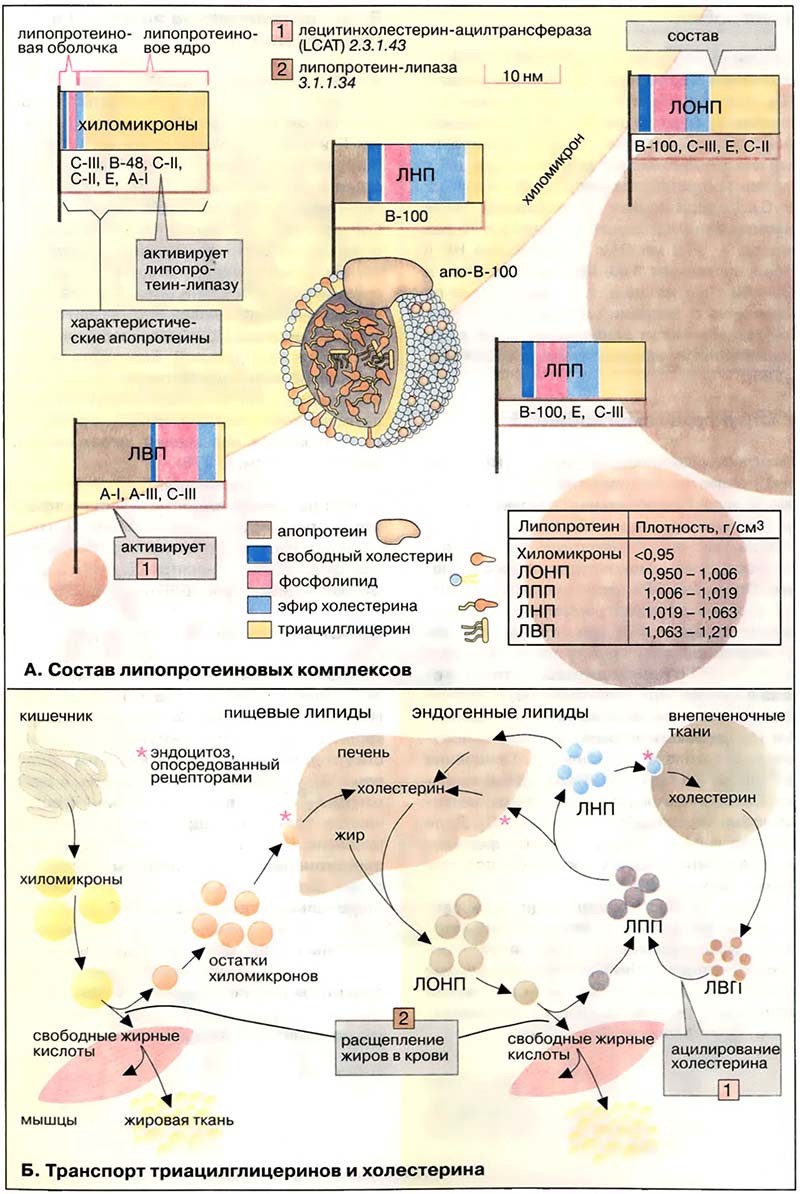
Липопротеины плазмы подразделяются на две группы: белки, связанные с липидами ковалентно, и белки, связанные с липидами нековалентными связями. Липид, ковалентно связанный с липопротеином, служит якорем, с помощью которого белки прикрепляются к мембране (см. Транслокация белков. Шапероны). Липопротеины второй группы не имеют строго определённого состава. Они скорее представляют собой агрегаты липидов с белками. Эти липопротеиновые комплексы имеют переменные размеры и состав. В плазме крови они обеспечивают транспорт водонерастворимых липидов.
Статьи раздела «Липопротеины»:
Структура:
Списки:
Сложность материала:
Величины и единицы:
Книги Список книг
 Practical Forensic Microscopy: A Laboratory Manual
 Forensic Microscopy: A Laboratory Manual will provide the student with a practical overview and understanding of the various microscopes and ...

 The Reef Aquarium: Science, Art, and Technology, Vol. 3
 The Reef Aquarium Volume Three: Science, Art, and Technology Reefkeeping science involves the interplay of biology, chemistry, and physics. However, a ...
 Стероиды. Строение, получение, свойства и биологическое значение, применение в медицине и ветеринарии
 Учебное пособие освещает систематизированную совокупность современных знаний ...