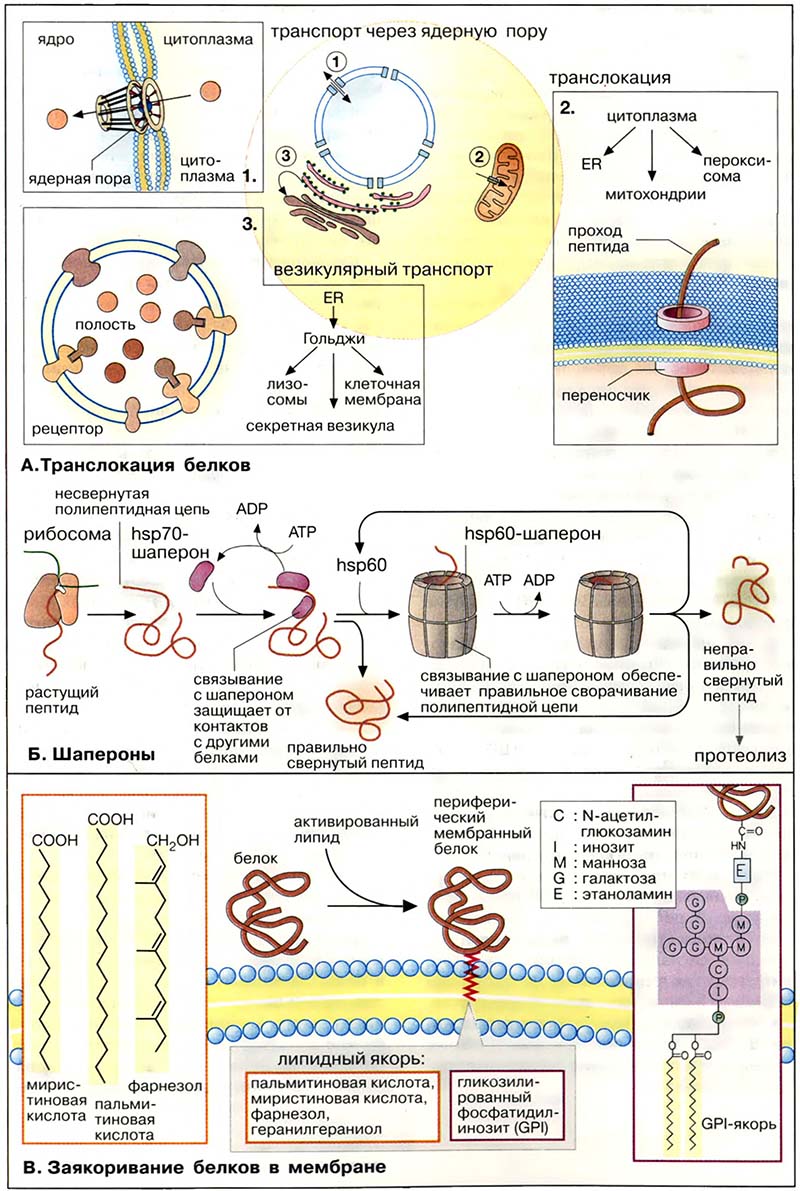
Пептидная цепь, растущая в процессе трансляции, принимает вторичную и третичную структуру (см. Свёртывание белков) в результате сложного многоступенчатого процесса, идущего во времени. Для образования правильной структуры с ещё несвернувшейся пептидной цепочкой связываются специальные белки — шапероны. Шапероны обладают сродством к экспонированным гидрофобным участкам полипептидной цепи. Связывание с шаперонами препятствует агрегации с другими белками и тем самым создаёт условия для нормального сворачивания растущего пептида. Взаимодействие с шаперонами — процесс энергозависимый: при освобождении шаперонов гидролизуется АТФ (АТР).
Шапероны принадлежат к трём белковым семействам, так называемым белкам теплового шока (hsp60, hsp70, hsp90). Своё название эти белки получили потому, что их синтез возрастает при повышении температуры и других формах стресса. При этом они выполняют функцию защиты белков клетки от денатурации. Белки — представители семейства hsp70 — связываются на начальной фазе образования растущего пептида. Одни из них контролируют процесс сворачивания белка в цитоплазме, другие — участвуют в переносе белков в митохондрии. Белки hsp60 охватывают синтезированный полипептид наподобие бочонка, тем самым обеспечивая условия для принятия правильной конформации.
Шапероны принадлежат к трём белковым семействам, так называемым белкам теплового шока (hsp60, hsp70, hsp90). Своё название эти белки получили потому, что их синтез возрастает при повышении температуры и других формах стресса. При этом они выполняют функцию защиты белков клетки от денатурации. Белки — представители семейства hsp70 — связываются на начальной фазе образования растущего пептида. Одни из них контролируют процесс сворачивания белка в цитоплазме, другие — участвуют в переносе белков в митохондрии. Белки hsp60 охватывают синтезированный полипептид наподобие бочонка, тем самым обеспечивая условия для принятия правильной конформации.
Статьи раздела «Транслокация белков. Шапероны»:
Структура:
Списки:
Сложность материала:
Величины и единицы:
Книги Список книг
 Анализ биологических последовательностей
 Предлагаемая книга отражает современное состояние сравнительно новой, но весьма ...
 Саморегулируемые волны химических реакций и биологических популяций
 Монография посвящена математическому моделированию и исследованию нелинейных ...
 Stress — From Molecules to Behavior: A Comprehensive Analysis of the Neurobiology of Stress Responses
 This book comprehensively covers the molecular basis of stress responses of the nervous system, providing a unique and fundamental insight into the ...
