Белки плазмы крови

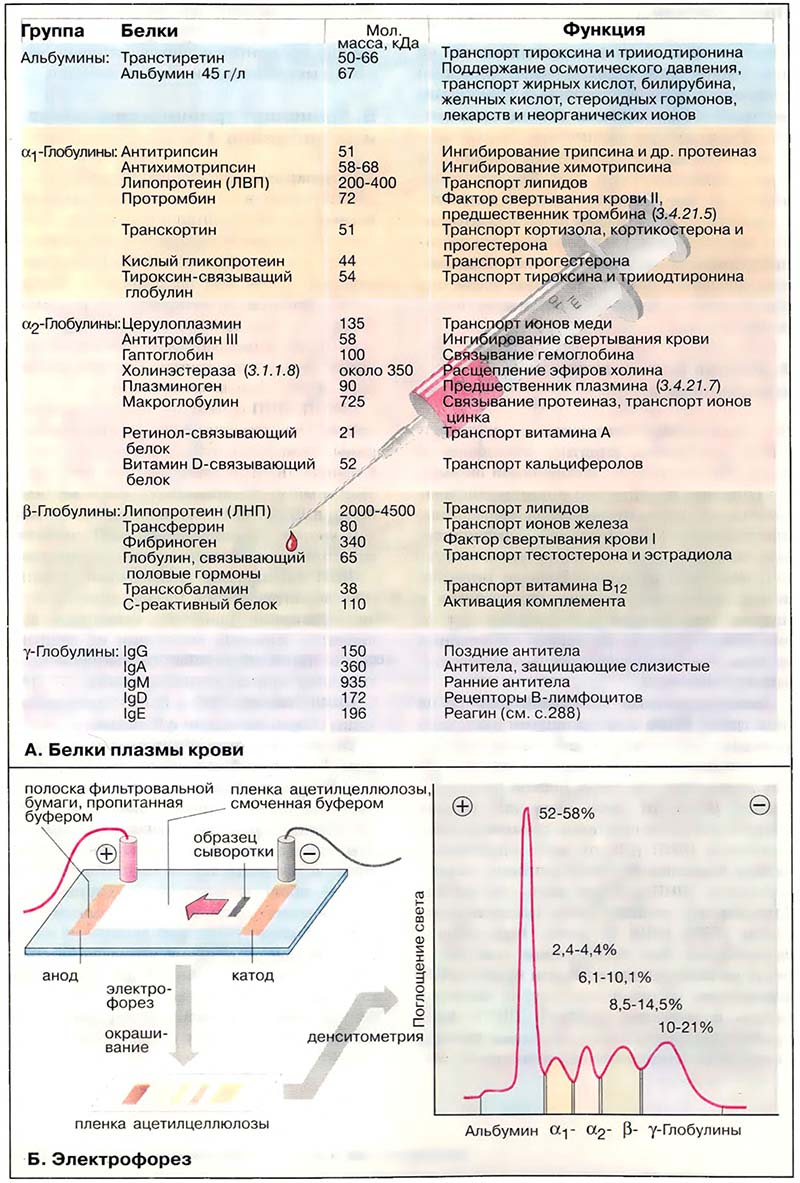
Основную массу растворимых нелетучих веществ плазмы крови образуют белки. Их концентрация лежит в пределах 60-80 г/л; они составляют примерно 4 % всех белков организма.

Ткани и органы. Кровь / Белки плазмы крови

Статьи раздела «Белки плазмы крови»:

Следущая статья   |   — Вернуться в раздел


Koneman’s Color Atlas and Textbook of Diagnostic Microbiology / Long considered the definitive work in its field, this new edition presents all the principles and practices readers need for a solid grounding in all aspects of clinical microbiology—bacteriology, mycology, parasitology, and virology. Tests are presented according to the Clinical and Laboratory StaKoneman’s Color Atlas and Textbook of Diagnostic Microbiology
Long considered the definitive work in its field, this new edition presents all the principles and practices readers need for a solid grounding in all ...
Physical Properties of Macromolecules / Explains and analyzes polymer physical chemistry research methods and experimental data Taking a fresh approach to polymer physical chemistry, Physical Properties of Macromolecules integrates the two foundations of physical polymer science, theory and practice. It provides the tools to understand poPhysical Properties of Macromolecules
Explains and analyzes polymer physical chemistry research methods and experimental data Taking a fresh approach to polymer physical chemistry, ...
Жизнь молекул в экстремальных условиях. Горячий микромир Камчатки / Книга посвящена исследованию вопроса о том, в каких предельных экстремальных условиях возможно существование биомакромолекул и, следовательно, возможна жизнь. Обсуждение базируется на более чем тридцатилетнем опыте экспедиционных работ в областях активной вулканической деятельности. На Земле экстремЖизнь молекул в экстремальных условиях. Горячий микромир Камчатки
Книга посвящена исследованию вопроса о том, в каких предельных экстремальных ...
NMR Studies of Structural Motifs: Protein Folding and Ligand Binding / NMR of Structural Motifs: The agrin G3 domain is critical in development and maintenance of the neuromuscular junction. G3 binds -dystroglycan and initiates acetylcholine receptor clustering on myotube membranes. Using NMR spectroscopy, we show both active B8 and inactive B0 isoforms binding sialic NMR Studies of Structural Motifs: Protein Folding and Ligand Binding
NMR of Structural Motifs: The agrin G3 domain is critical in development and maintenance of the neuromuscular junction. G3 binds -dystroglycan and ...