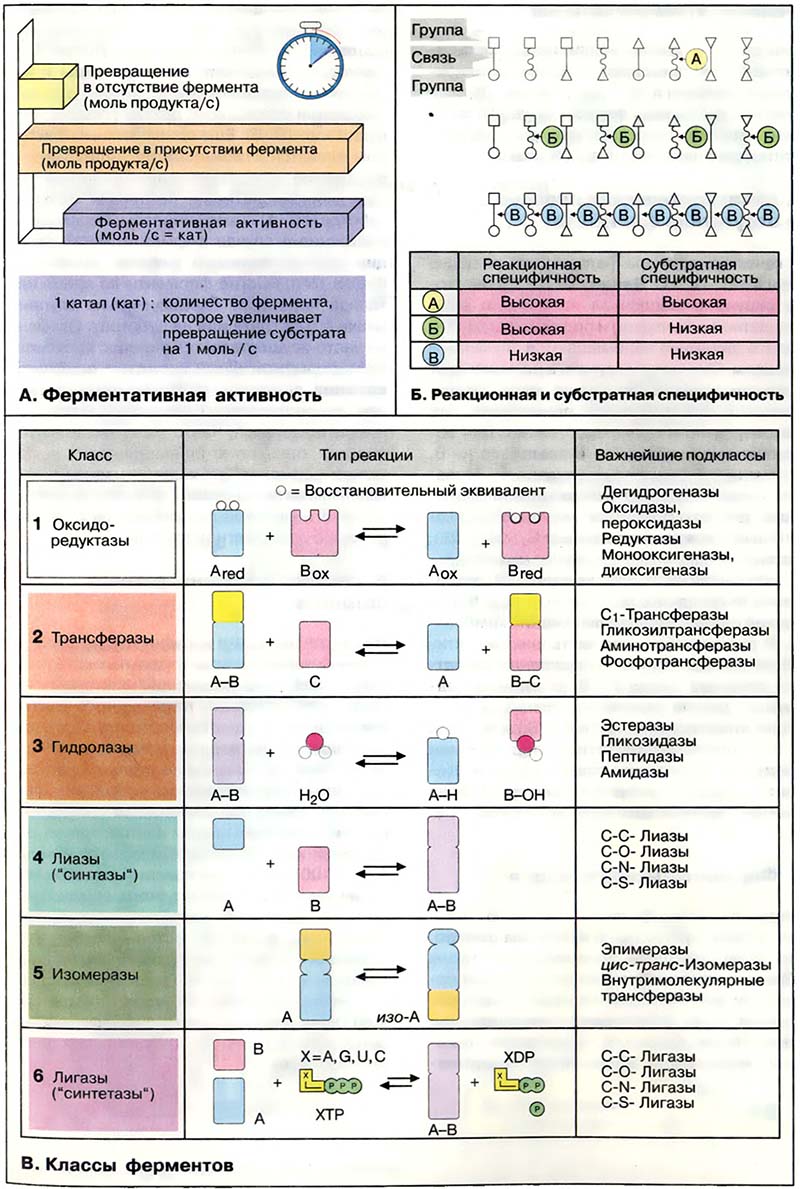
Действие большинства ферментов высоко специфично. Понятие специфичности относится не только к типам каталитических реакций (реакционная специфичность), но и к природе соединений — субстратов (субстратная специфичность). В качестве примера на схеме приведены ферменты, расщепляющие химическую связь. Высокоспецифичные ферменты (тип А — верхняя строка таблицы) катализируют расщепление только одного типа связи в субстратах определённой структуры. Ферменты типа Б (средняя строка) обладают ограниченной реакционной специфичностью, но широкой субстратной специфичностью. Ферменты типа В (с низкой реакционной и низкой субстратной специфичностями; нижняя строка) встречаются редко.
Статьи раздела «Ферменты: общие сведения»:
- Ферменты: общие сведения
- А. Ферментативная активность
- Б. Реакционная и субстратная специфичность
- В. Классы ферментов
Структура:
Списки:
Сложность материала:
Величины и единицы:
Книги Список книг
 Asphaltenes: Chemical Transformation during Hydroprocessing of Heavy Oils (Chemical Industries)
 During the upgrading of heavy petroleum, asphaltene is the most problematic impurity since it is the main cause of catalyst deactivation and sediments ...
 Планета вирусов
 Вирусы — невидимые, но активные участники борьбы за место в биосфере Земли. С их ...
 Молекулярные аспекты жизни
 Два известных американских биохимика в сравнительно небольшой книге подвели ...
 Metals in Medicine
 Working from basic chemical principles, Metals in Medicine presents a complete and methodical approach to the topic. Introductory chapters discuss ...