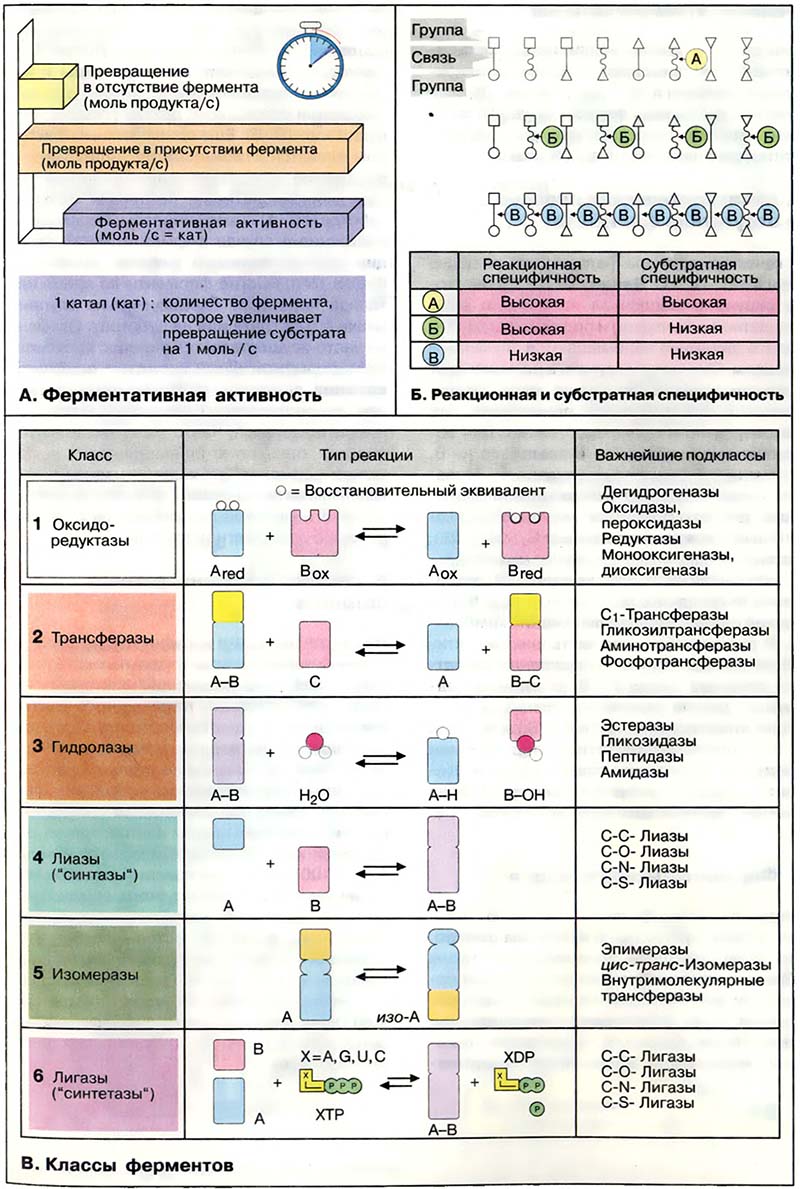
Каталитическое действие фермента, то есть его активность, определяют в стандартных условиях по увеличению скорости (фиолетовый цвет на схеме) каталитической реакции (оранжевый цвет) по сравнению с некаталитической (жёлтый цвет). Обычно скорость реакции указывают как изменение концентрации субстрата или продукта за единицу времени (моль/(л×с)) (см. Кинетика химических реакций). Так как каталитическая активность не зависит от объёма раствора, в котором протекает реакция, активность фермента выражают в каталах; 1 кат — это количество фермента, которое превращает 1 моль субстрата за 1 с. Другой единицей активности является международная единица (Е) — количество фермента, превращающего 1 мкмоль субстрата в 1 мин (1 Е = 16,7 нкат).
Статьи раздела «Ферменты: общие сведения»:
- Ферменты: общие сведения
- А. Ферментативная активность
- Б. Реакционная и субстратная специфичность
- В. Классы ферментов
Структура:
Списки:
Сложность материала:
Величины и единицы:
Книги Список книг
 Планета вирусов
 Вирусы — невидимые, но активные участники борьбы за место в биосфере Земли. С их ...
 Молекулярные механизмы взаимодействия эндотоксинов с клетками-мишенями
 Открытие истинных рецепторов к эндотоксинам (липополисахаридам), сделанное на ...
 Проблемы космической биологии. Том 9. Токсикология продуктов жизнедеятельности и их значение в формировании искусственной атмосферы герметизированных помещений
 В монографии рассматривается история развития учения об «антропотоксинах», ...
 Химия билирубина и его аналогов
 В настоящей монографии изложены результаты фундаментальных и прикладных ...