Аминокислотный анализ

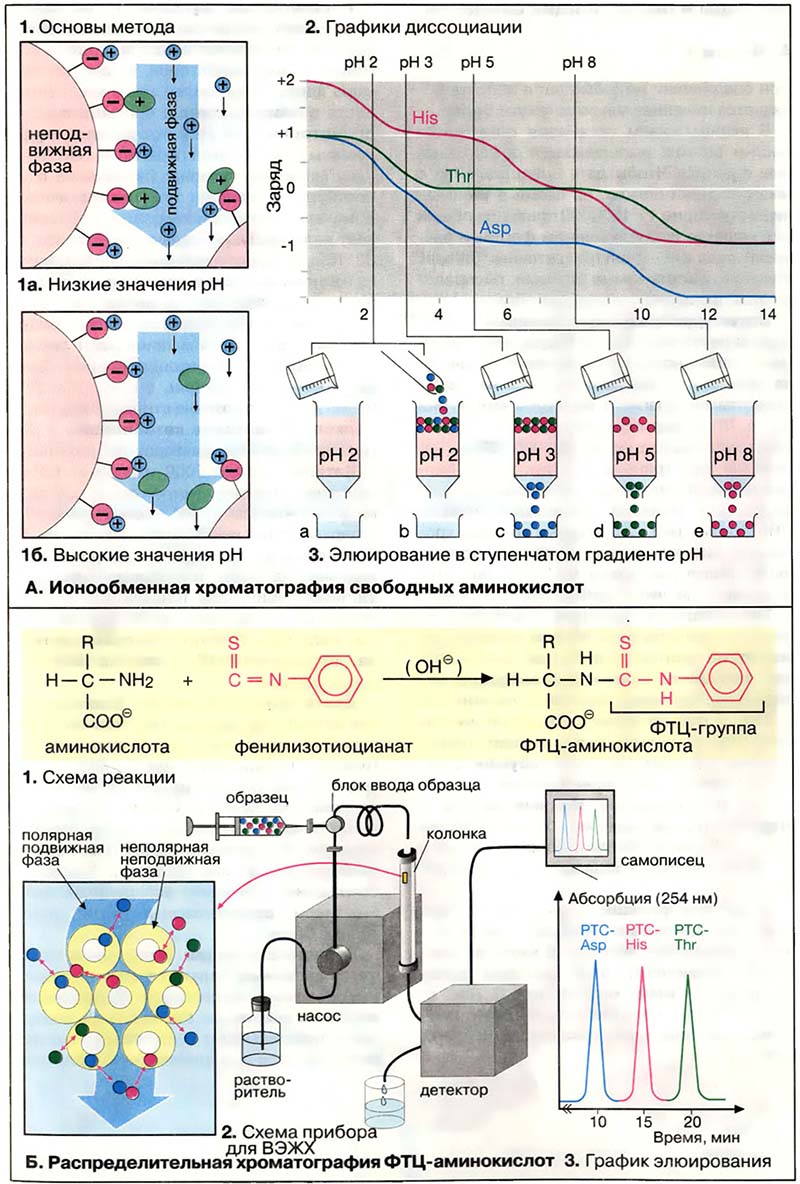
Разделение и анализ аминокислот и их производных используются при определении аминокислотного состава белков, секвенировании пептидов, а также с целью диагностики нарушений аминокислотного и белкового обмена. В этом разделе рассматриваются два наиболее важных в практическом отношении метода аминокислотного анализа.

Биомолекулы. Аминокислоты / Аминокислотный анализ

Статьи раздела «Аминокислотный анализ»:

Следущая статья   |   — Вернуться в раздел


Солитоны в молекулярных системах / В монографии изложены новейшие подходы к изучению транспорта энергии и электронов в квазиодномерных молекулярных системах и протонов в макромолекулах с водородными связями. Показана большая роль нелинейных явлений в биологии, приводящих к образованию солитонов. Обсуждаются некоторые вопросы современСолитоны в молекулярных системах
В монографии изложены новейшие подходы к изучению транспорта энергии и ...
Books a la Carte Plus for Microbiology with Diseases by Taxonomy (3rd Edition) / The Third Edition of Microbiology with Diseases by Taxonomy is the most cutting-edge microbiology book available, offering unparalleled currency, accuracy, and assessment. The state-of-the science approach begins with a compelling focus on emerging diseases and diseases students will encounter in clBooks a la Carte Plus for Microbiology with Diseases by Taxonomy (3rd Edition)
The Third Edition of Microbiology with Diseases by Taxonomy is the most cutting-edge microbiology book available, offering unparalleled currency, ...
Molecular Biology of the Cell: The Problems Book / The Problems Book helps students appreciate the ways in which experiments and simple calculations can lead to an understanding of how cells work by introducing the experimental foundation of cell and molecular biology. Each chapter will review key terms, test for understanding basic concepts, and poMolecular Biology of the Cell: The Problems Book
The Problems Book helps students appreciate the ways in which experiments and simple calculations can lead to an understanding of how cells work by ...
NMR Studies of Structural Motifs: Protein Folding and Ligand Binding / NMR of Structural Motifs: The agrin G3 domain is critical in development and maintenance of the neuromuscular junction. G3 binds -dystroglycan and initiates acetylcholine receptor clustering on myotube membranes. Using NMR spectroscopy, we show both active B8 and inactive B0 isoforms binding sialic NMR Studies of Structural Motifs: Protein Folding and Ligand Binding
NMR of Structural Motifs: The agrin G3 domain is critical in development and maintenance of the neuromuscular junction. G3 binds -dystroglycan and ...