Апоптоз запускается внешними сигналами, которые используют различные сигнальные пути. Большинство этих путей действительно запускают апоптоз, однако некоторые пути его блокируют.
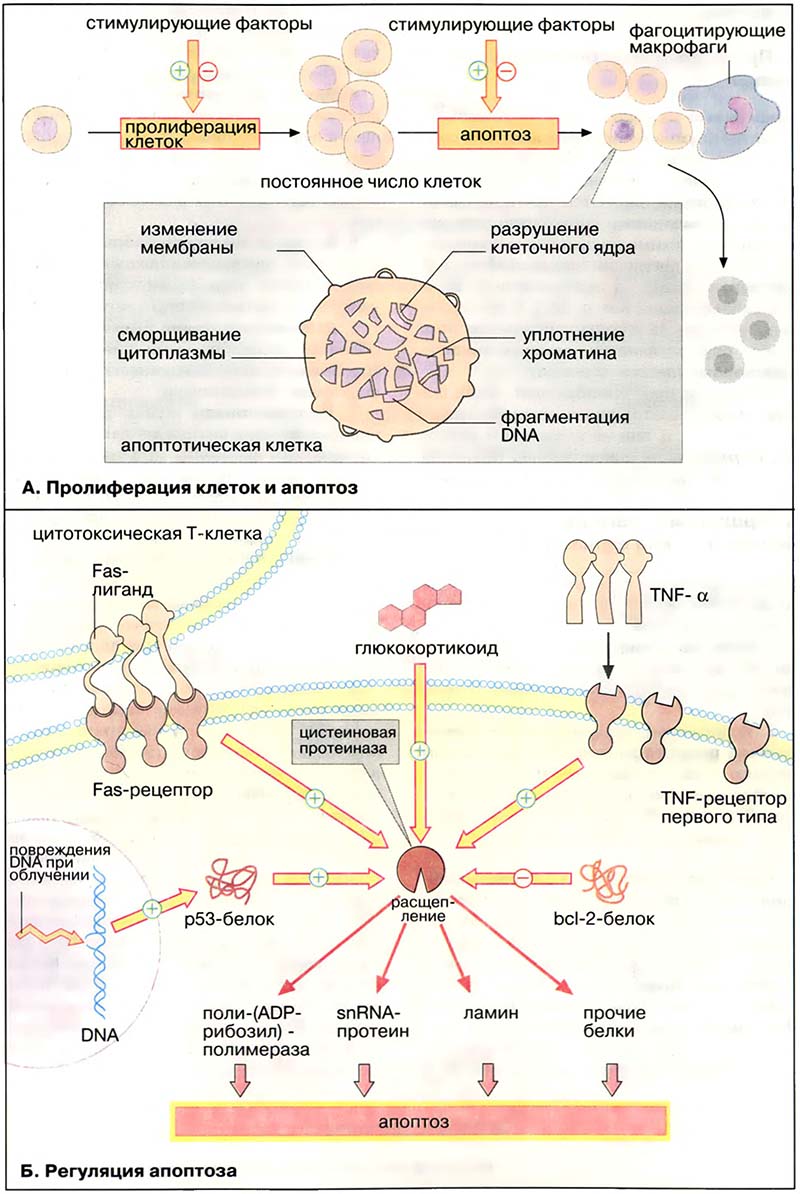
Фактор некроза опухолей [α-ФНО (TNF-α), см. Цитокины] связывается с ФНО-рецептором первого типа и запускает апоптоз. Центральное место в регуляции апоптоза принадлежит цистеиновым протеиназам (см. Метаболизм стероидных гормонов), родственным интерлейкин-1β-конвертазе (ИК). Предполагают, что активация этих протеиназ через ФНО-рецептор происходит как многоступенчатый процесс белок-белкового взаимодействия. ИК-подобные протеиназы специфическим образом расщепляют поли-(АДФ-рибозил)-полимеразу (ПАРП), белки sn-рибонуклеопротеидного комплекса, ламин (белок ядерной мембраны) и другие белки. Эти изменённые за счёт протеолиза белки запускают процесс апоптоза.
По аналогичному пути реализуется сигнал от Fas-лиганда, белка клеточной мембраны соседних клеток. Fas-лигэнд в виде тримера связывается с Fas-рецептором. Затем, по аналогии с ФНО-рецептором, сигнал передаётся на цистеиновые протеиназы. Для ФНО- и Fas-специфичных рецепторов характерно, что они активируются путём образования олигомеров.
Источником сигнала может быть и клеточное ядро. Так, белок р53, продукт онко-супрессорного гена (см. Онкогены), который тоже активирует цистеиновые протеиназы, может быть активирован посредством нерепарабельного разрыва ДНК (DNA). Утрата клеткой белка р53 ведёт к повышенной скорости роста опухоли.
Сигналам, которые активируют апоптоз, противостоят другие сигналы, блокирующие апоптоз. Таким сигналом может быть белок bcl-2 или родственные белки. Ген этого белка присутствует в геноме некоторых вирусов. С помощью продукта этого гена вирусы препятствуют преждевременной гибели клетки-хозяина посредством апоптоза.
Фактор некроза опухолей [α-ФНО (TNF-α), см. Цитокины] связывается с ФНО-рецептором первого типа и запускает апоптоз. Центральное место в регуляции апоптоза принадлежит цистеиновым протеиназам (см. Метаболизм стероидных гормонов), родственным интерлейкин-1β-конвертазе (ИК). Предполагают, что активация этих протеиназ через ФНО-рецептор происходит как многоступенчатый процесс белок-белкового взаимодействия. ИК-подобные протеиназы специфическим образом расщепляют поли-(АДФ-рибозил)-полимеразу (ПАРП), белки sn-рибонуклеопротеидного комплекса, ламин (белок ядерной мембраны) и другие белки. Эти изменённые за счёт протеолиза белки запускают процесс апоптоза.
По аналогичному пути реализуется сигнал от Fas-лиганда, белка клеточной мембраны соседних клеток. Fas-лигэнд в виде тримера связывается с Fas-рецептором. Затем, по аналогии с ФНО-рецептором, сигнал передаётся на цистеиновые протеиназы. Для ФНО- и Fas-специфичных рецепторов характерно, что они активируются путём образования олигомеров.
Источником сигнала может быть и клеточное ядро. Так, белок р53, продукт онко-супрессорного гена (см. Онкогены), который тоже активирует цистеиновые протеиназы, может быть активирован посредством нерепарабельного разрыва ДНК (DNA). Утрата клеткой белка р53 ведёт к повышенной скорости роста опухоли.
Сигналам, которые активируют апоптоз, противостоят другие сигналы, блокирующие апоптоз. Таким сигналом может быть белок bcl-2 или родственные белки. Ген этого белка присутствует в геноме некоторых вирусов. С помощью продукта этого гена вирусы препятствуют преждевременной гибели клетки-хозяина посредством апоптоза.
Статьи раздела «Апоптоз»:
- А. Пролиферация клеток и апоптоз
- Б. Регуляция апоптоза
Структура:
Списки:
Сложность материала:
Величины и единицы:
Книги Список книг
 Биогенный магнетит и магниторецепция (комплект из 2 книг)
 Монографический сборник американских авторов первый в мировой литературе ...

 Молекулярные механизмы взаимодействия эндотоксинов с клетками-мишенями
 Открытие истинных рецепторов к эндотоксинам (липополисахаридам), сделанное на ...
 Введение в молекулярную биологию
 Книга представляет собой переработанный курс лекций, который авторы читают ...