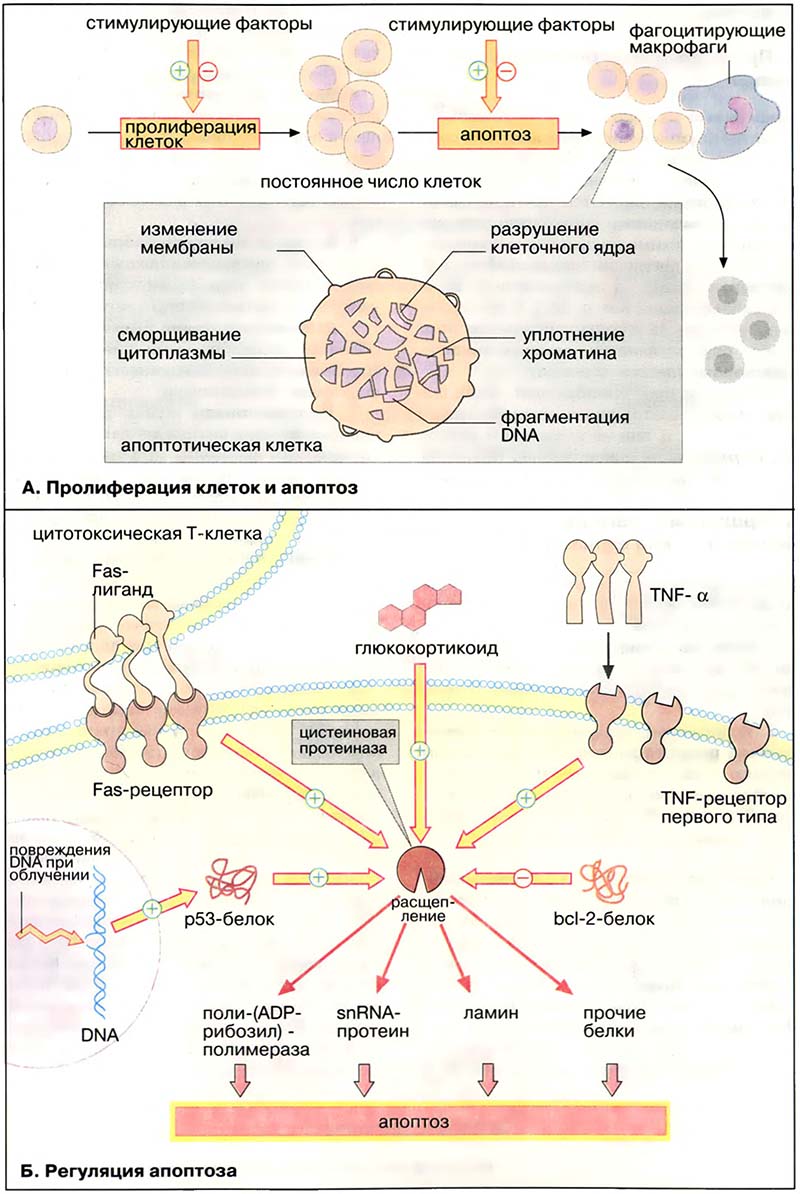
Количество клеток в ткани регулируется двумя процессами — пролиферацией клеток и «программированной, или физиологической, гибелью клеток» (апоптозом). Оба процесса в организме находятся под контролем стимулирующих или ингибирующих факторов, которые присутствуют в растворимой форме или экспрессируются на поверхности соседних клеток.
Апоптоз — генетически запрограммированная гибель клеток, которая приводит к «аккуратной» разборке и удалению клеток. Морфологическими признаками этого активного процесса являются изменения клеточной мембраны («отшнуровывание» пузырьков, так называемых апоптотических телец), распад клеточного ядра, уплотнение хроматина и фрагментация ДНК. Клетки, подвергшиеся апоптозу, распознаются макрофагами и другими фагоцитирующими клетками и быстро элиминируются. Очень важно то, что при апоптозе не развивается воспалительный процесс.
Другой вид гибели клеток, некроз, отличается от апоптоза тем, что он развивается в результате повреждения клеточной мембраны химическими агентами или физическими факторами. При некрозе повреждённые клетки набухают, а затем лизируются; при этом часто развивается воспалительный процесс.
С помощью апоптоза осуществляется регуляция объёма или, точнее, количества клеток в той или иной ткани. В особенности это касается быстро пролиферирующих клеток, таких, как клетки кроветворной системы или гепатоциты печени. Посредством апоптоза организм избавляется от ненужных, или «отработавших», клеток, например во время эмбрионального развития, при формировании нервной системы и при иммунном ответе. Путём апоптоза элиминируются трансформированные клетки, например при канцерогенной дегенерации, вирусной инфекции или необратимом повреждении ДНК в случае облучения. Примером апоптоза является шелушение кожи при солнечном загаре.
Апоптоз — генетически запрограммированная гибель клеток, которая приводит к «аккуратной» разборке и удалению клеток. Морфологическими признаками этого активного процесса являются изменения клеточной мембраны («отшнуровывание» пузырьков, так называемых апоптотических телец), распад клеточного ядра, уплотнение хроматина и фрагментация ДНК. Клетки, подвергшиеся апоптозу, распознаются макрофагами и другими фагоцитирующими клетками и быстро элиминируются. Очень важно то, что при апоптозе не развивается воспалительный процесс.
Другой вид гибели клеток, некроз, отличается от апоптоза тем, что он развивается в результате повреждения клеточной мембраны химическими агентами или физическими факторами. При некрозе повреждённые клетки набухают, а затем лизируются; при этом часто развивается воспалительный процесс.
С помощью апоптоза осуществляется регуляция объёма или, точнее, количества клеток в той или иной ткани. В особенности это касается быстро пролиферирующих клеток, таких, как клетки кроветворной системы или гепатоциты печени. Посредством апоптоза организм избавляется от ненужных, или «отработавших», клеток, например во время эмбрионального развития, при формировании нервной системы и при иммунном ответе. Путём апоптоза элиминируются трансформированные клетки, например при канцерогенной дегенерации, вирусной инфекции или необратимом повреждении ДНК в случае облучения. Примером апоптоза является шелушение кожи при солнечном загаре.
Статьи раздела «Апоптоз»:
- А. Пролиферация клеток и апоптоз
- Б. Регуляция апоптоза
Структура:
Списки:
Сложность материала:
Величины и единицы:
Книги Список книг
 Биогенный магнетит и магниторецепция (комплект из 2 книг)
 Монографический сборник американских авторов первый в мировой литературе ...
 Biological Aging: Methods and Protocols
 Biological Aging: Methods and Protocols investigates the various processes that are affected by the age of an organism. Several new tools for the ...
 Прикладная молекулярная биология. Изд.2
 В учебном пособии изложены основы молекулярной биологии, а также направления ...
 Объекты биологии развития
 Монография представляет собой вторую книгу из серии «Проблемы биологии ...