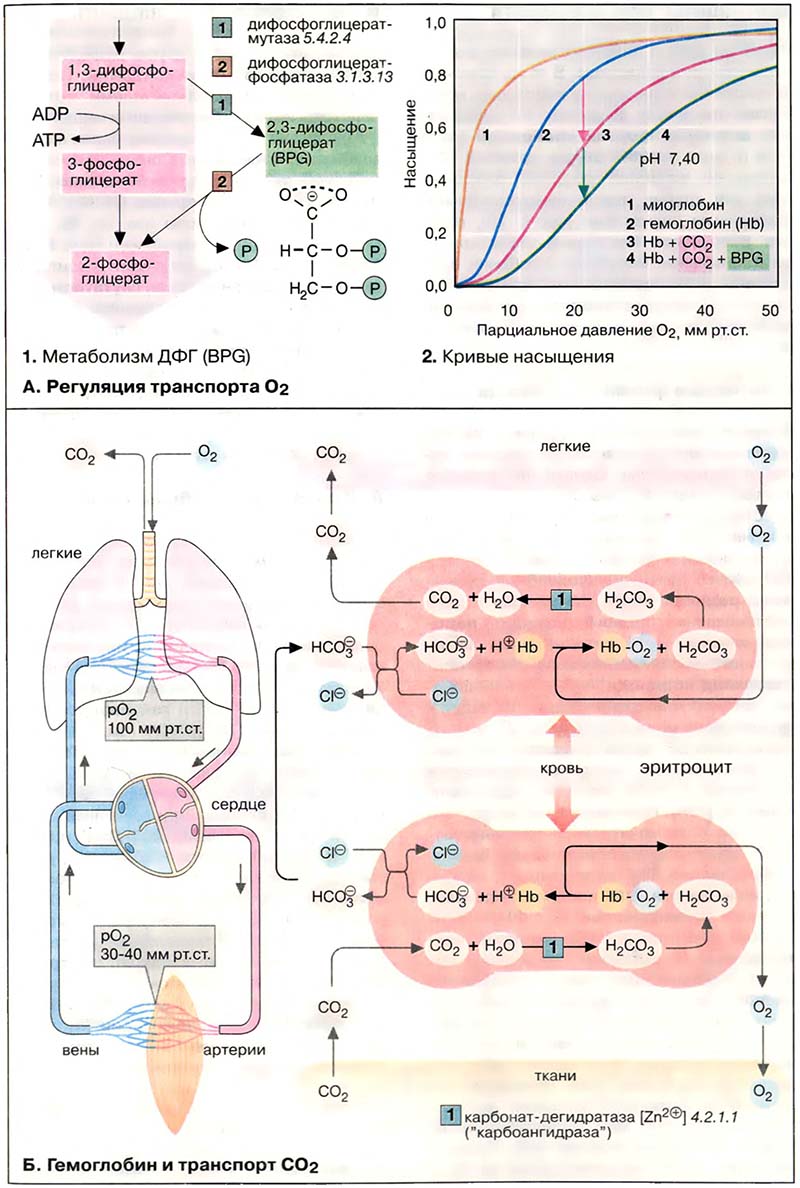
Большинство тканей для поддержания своего окислительного потенциала постоянно снабжаются молекулярным кислородом (O2). Из-за плохой растворимости O2 связывается и транспортируется в крови гемоглобином (см. Гемоглобин). Свойства Hb таковы, что он не только обеспечивает транспорт кислорода, но и создаёт благоприятные условия для связывания O2 в лёгких и передачи его тканям.
Статьи раздела «Транспорт газов»:
- Транспорт газов
- А. Регуляция транспорта O2
- Б. Гемоглобин и транспорт CO2
Структура:
Списки:
Сложность материала:
Величины и единицы:
Книги Список книг
 Вычислительные устройства в биологии и медицине
 В книге обобщён большой опыт, накопленный за последние годы в области применения ...
 Molecular Biology of the Cell: The Problems Book
 The Problems Book helps students appreciate the ways in which experiments and simple calculations can lead to an understanding of how cells work by ...
 Микроэлементы в окружающей среде. Биогеохимия, биотехнология и биоремедиация
 Книга посвящена анализу роли микроэлементов (металлов и металлоидов) в ...
 Histone H1 glycation and rutin metabolites as glycation inhibitors: Nuclear protein glycation in vivo and novel natural product AGE inhibitors
 Protein glycation, induced by hyperglycemia, is implicated in the appearance of diabetic complications and the aging process. Glycation involves the ...