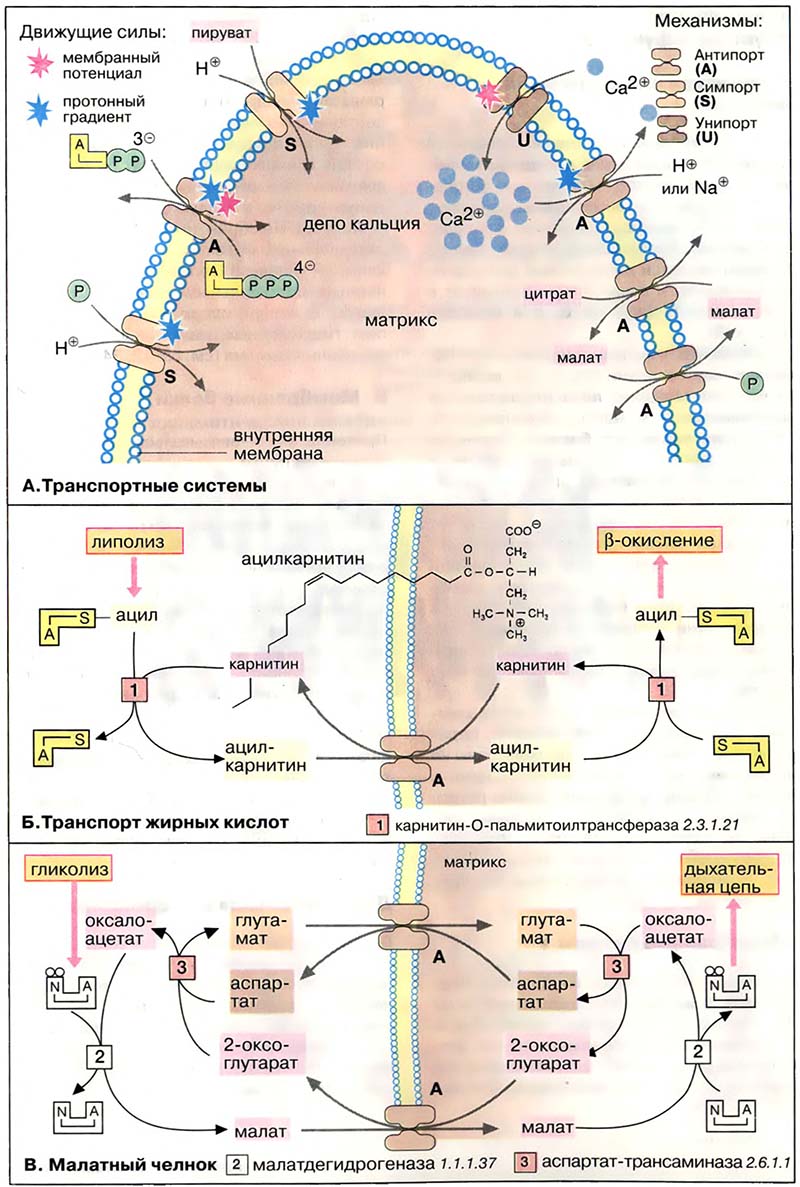
Для импорта восстановительных эквивалентов в форме НАДН + Н+ (кофермент-связанного водорода), образующихся в цитоплазме путём гликолиза, в митохондриях имеются несколько челночных систем. В митохондриях млекопитающих этот транспорт осуществляется в основном при помощи челночного механизма, использующего пару малат-оксалоацетат. Основной функцией этого механизма является перенос восстановительных эквивалентов в составе малата. Малат, попадая в матрикс при посредстве переносчика, окисляется до оксалоацетата под действием малатдегидрогеназы. Оксалоацетат переносится обратно в цитоплазму лишь после трансаминирования в аспартат. Поскольку оксалоацетат может образовываться в избыточном количестве, в реакции трансаминирования и последующем транспорте принимает участие глугамат и 2-оксоглутарат. На схеме показано, что малатный челнок функционирует в обоих направлениях, обеспечивая перенос восстановительных эквивалентов от цитоплазматического НАДН в митохондрии без переноса НАД+. В митохондриях насекомых трансмембранный перенос восстановительных эквивалентов осуществляется с помощью глицерофосфатного челнока.
Движущей силой транспортных процессов во внутренней мембране митохондрий служит концентрационный градиент метаболитов или электрохимический потенциал (см. Дыхательная цепь). Например, карнитиновая система транспорта жирных кислот работает за счёт высоких концентраций ацил-КоА в цитоплазме. Движущей силой импорта фосфата и пирувата служит протонный градиент, в то время как обмен АТФ/АДФ и выброс ионов Ca2+ зависят от трансмембранного потенциала внутренней мембраны митохондрий.
Движущей силой транспортных процессов во внутренней мембране митохондрий служит концентрационный градиент метаболитов или электрохимический потенциал (см. Дыхательная цепь). Например, карнитиновая система транспорта жирных кислот работает за счёт высоких концентраций ацил-КоА в цитоплазме. Движущей силой импорта фосфата и пирувата служит протонный градиент, в то время как обмен АТФ/АДФ и выброс ионов Ca2+ зависят от трансмембранного потенциала внутренней мембраны митохондрий.
Статьи раздела «Транспортные системы»:
Структура:
Списки:
Сложность материала:
Величины и единицы:
Книги Список книг
 Stress — From Molecules to Behavior: A Comprehensive Analysis of the Neurobiology of Stress Responses
 This book comprehensively covers the molecular basis of stress responses of the nervous system, providing a unique and fundamental insight into the ...
 Химия билирубина и его аналогов
 В настоящей монографии изложены результаты фундаментальных и прикладных ...
 Physical Properties of Macromolecules
 Explains and analyzes polymer physical chemistry research methods and experimental data Taking a fresh approach to polymer physical chemistry, ...
 Биологическая химия
 Учебник состоит из четырёх частей, включающих 15 глав, в которых изложены вопросы ...