Митохондрии являются главными потребителями кислорода в организме. Кислородная недостаточность (гипоксия) как результат недостаточного снабжения крови кислородом (ишемия) является причиной повреждения тканей вплоть до некроза. Первым признаком гипоксии является набухание митохондрий.
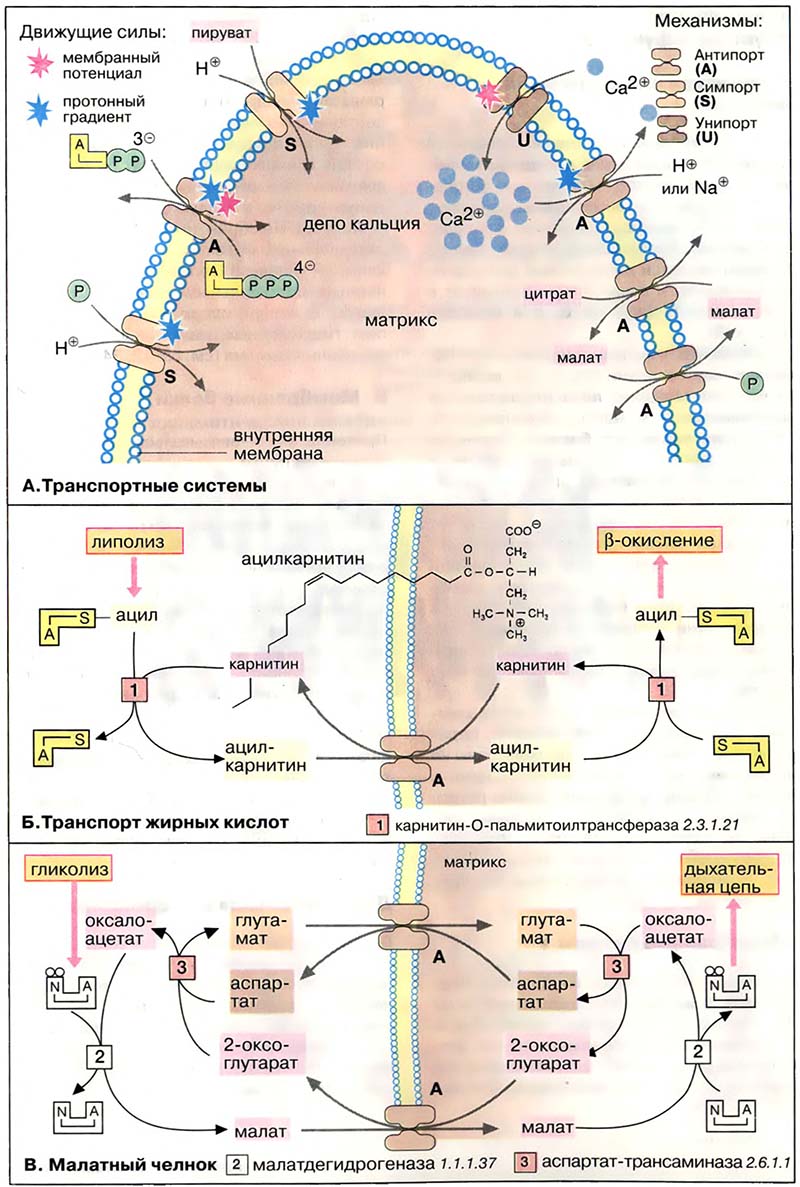
Статьи раздела «Транспортные системы»:
- Транспортные системы
- А. Транспортные системы
- Б. Транспорт жирных кислот
- В. Малатный челнок
- Дополнительная информация
Структура:
Списки:
Сложность материала:
Величины и единицы:
Книги Список книг
 Нелинейная динамика взаимодействующих популяций
 Проведён анализ режимов динамического поведения в системах нескольких ...
 Саморегулируемые волны химических реакций и биологических популяций
 Монография посвящена математическому моделированию и исследованию нелинейных ...
 NMR Studies of Structural Motifs: Protein Folding and Ligand Binding
 NMR of Structural Motifs: The agrin G3 domain is critical in development and maintenance of the neuromuscular junction. G3 binds -dystroglycan and ...
 Введение в молекулярную биологию
 Задача предлагаемой книги состоит в ознакомлении читателей с важнейшими фактами ...