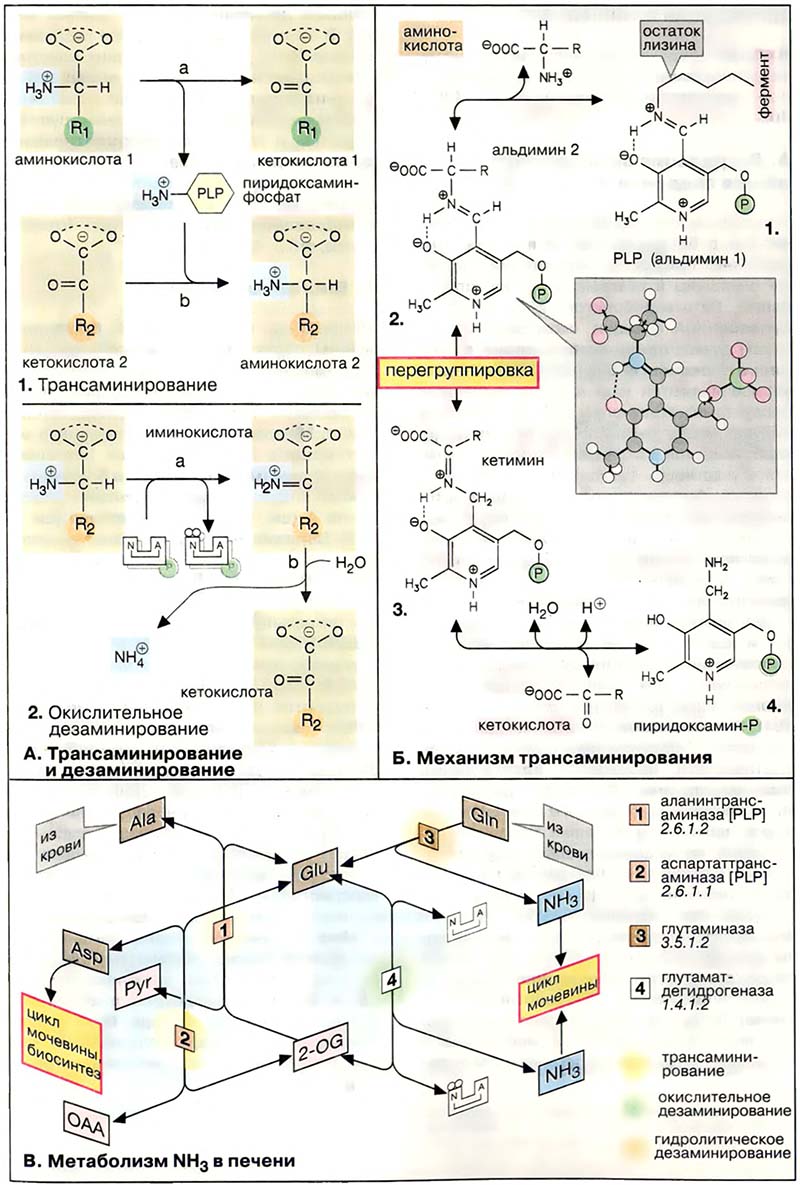
В ходе деградации белков накапливается аминный азот, который в отличие от углерода не пригоден для получения энергии за счёт окисления. Поэтому те аминогруппы, которые не могут быть повторно использованы для биосинтеза, превращаются в мочевину (см. Цикл мочевины) и выводятся из организма.
Статьи раздела «Трансаминирование и дезаминирование»:
- Трансаминирование и дезаминирование
- А. Трансаминирование и дезаминирование
- Б. Механизм трансаминирования
- В. Метаболизм NH3 в печени
Структура:
Списки:
Сложность материала:
Величины и единицы:
Книги Список книг
 Review of Medical Microbiology and Immunology
 To put your preparation for USMLE Step 1 and course exams on the fast track, only one resource will do: «Review of Medical Microbiology and ...
 Role of TCF in body axis formation: Discovery of a Dual Action of XTCF-3 in Xenopus Body Axis Formation
 A novel role of TCF family in body axis formation. Revolutionary high impact discoveries are described, elucidating the missing link in the Wnt ...
 Анализ биологических последовательностей
 Предлагаемая книга отражает современное состояние сравнительно новой, но весьма ...
 Прикладная молекулярная биология. Изд.2
 В учебном пособии изложены основы молекулярной биологии, а также направления ...