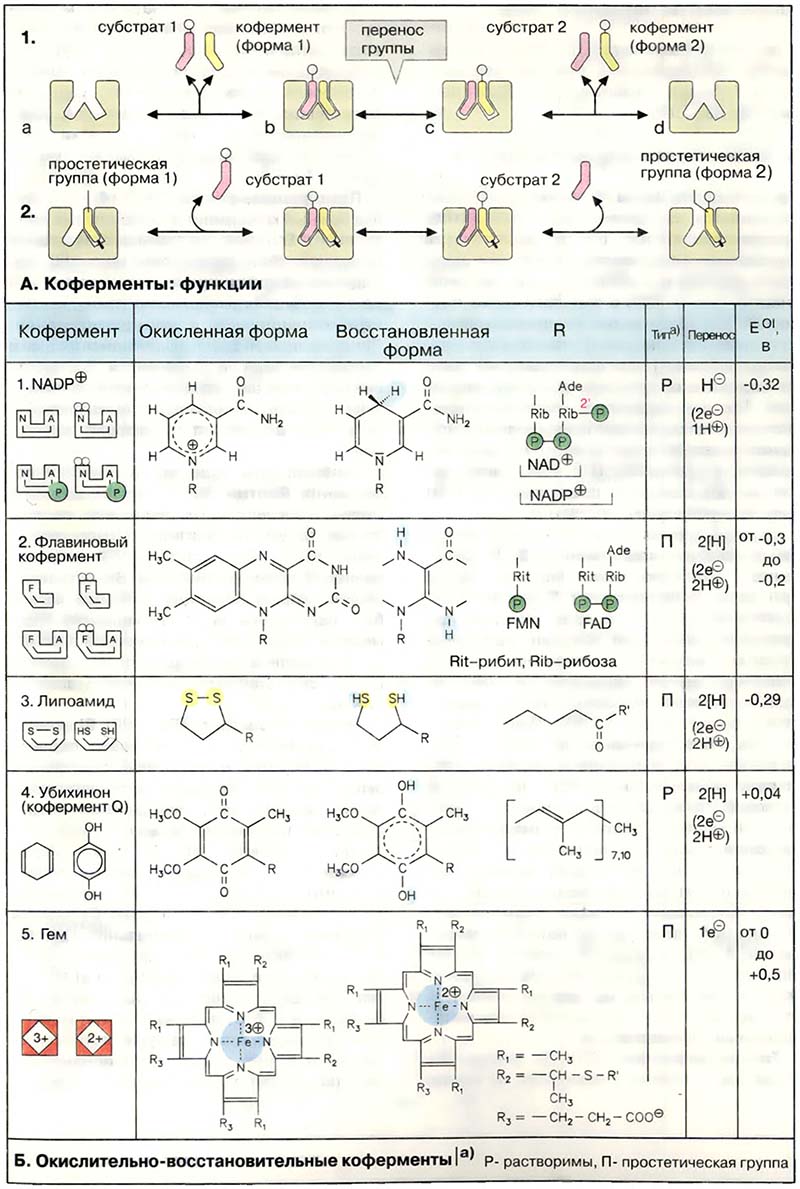
Многие ферментативные реакции включают перенос электронов или групп атомов с одного субстрата на другой. В таких реакциях всегда принимают участие вспомогательные соединения (коферменты), которые выполняют функцию промежуточных переносчиков атомов или функциональных групп. Так как эти вещества каталитически не активны, правильнее было бы их называть косубстратами. Ферменты обычно высокоспецифичны к своим субстратам (см. Ферменты: общие сведения), коферменты же взаимодействуют со многими ферментами, обладающими различной субстратной специфичностью.
По способам взаимодействия с ферментом различают растворимые коферменты и простетические группы. Растворимый кофермент (1) присоединяется во время реакции к молекуле фермента подобно субстрату, химически изменяется и затем снова освобождается. Первоначальная форма кофермента регенерируется во второй, независимой реакции. Простетической группой (2) называется кофермент, который прочно связан с ферментом и во время реакции его не покидает. Группа, связавшаяся с коферментом, далее переносится на следующий субстрат или другую молекулу кофермента (на схеме 2 не показано).
По способам взаимодействия с ферментом различают растворимые коферменты и простетические группы. Растворимый кофермент (1) присоединяется во время реакции к молекуле фермента подобно субстрату, химически изменяется и затем снова освобождается. Первоначальная форма кофермента регенерируется во второй, независимой реакции. Простетической группой (2) называется кофермент, который прочно связан с ферментом и во время реакции его не покидает. Группа, связавшаяся с коферментом, далее переносится на следующий субстрат или другую молекулу кофермента (на схеме 2 не показано).
Статьи раздела «Окислительно-восстановительные коферменты»:
- А. Коферменты: функции
- Б. Окислительно-восстановительные коферменты
Структура:
Списки:
Сложность материала:
Величины и единицы:
Книги Список книг
 Нелинейная динамика взаимодействующих популяций
 Проведён анализ режимов динамического поведения в системах нескольких ...
 Планета вирусов
 Вирусы — невидимые, но активные участники борьбы за место в биосфере Земли. С их ...
 Books a la Carte Plus for Microbiology with Diseases by Taxonomy (3rd Edition)
 The Third Edition of Microbiology with Diseases by Taxonomy is the most cutting-edge microbiology book available, offering unparalleled currency, ...
 Саморегулируемые волны химических реакций и биологических популяций
 Монография посвящена математическому моделированию и исследованию нелинейных ...