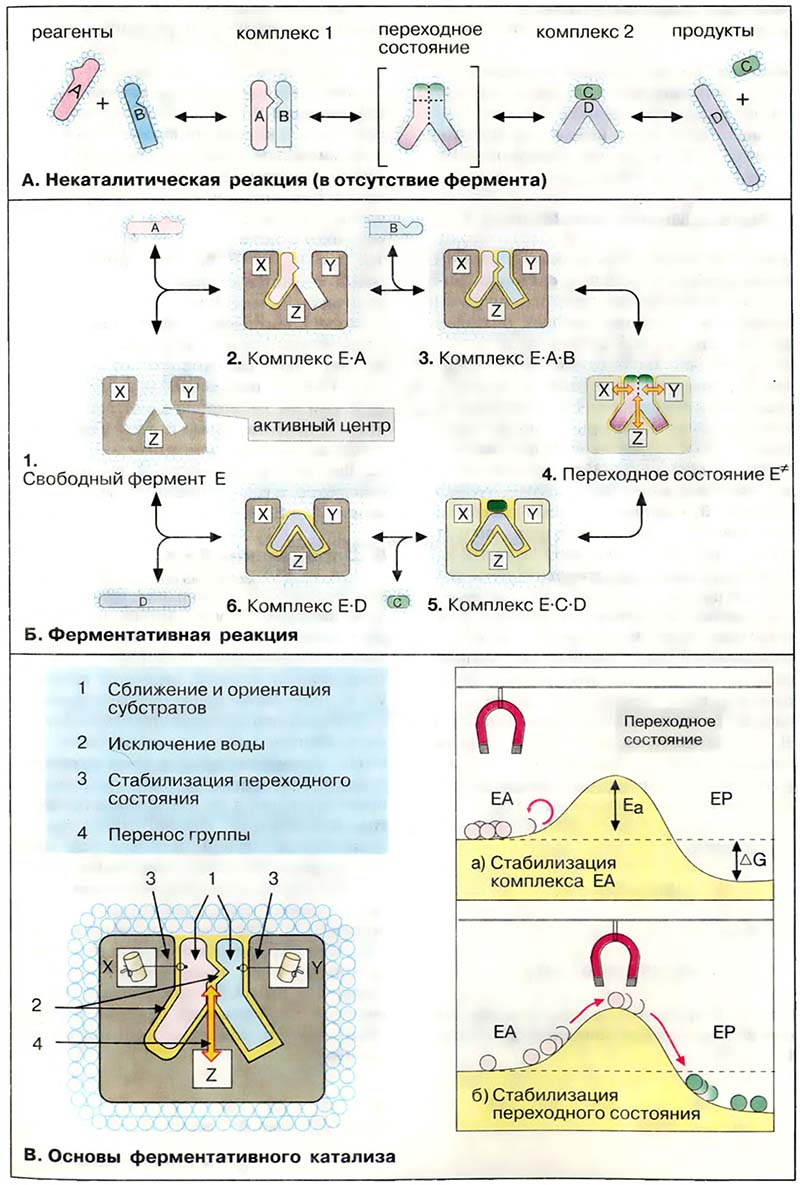
В качестве примера рассмотрим реакцию типа A + B → C + D. Вещества A и B в растворе окружены оболочкой из молекул воды (гидратной оболочкой) и под действием теплового движения перемещаются случайным образом. Они могут вступать в реакцию друг с другом только в том случае, когда сталкиваются в благоприятной ориентации, что маловероятно и происходит редко. Для образования продуктов C + D комплекс A—B, возникший в результате соударения молекул, должен образовать переходное состояние, для чего требуется, как правило, значительная энергия активации Еа (см. Аминокислоты: физические и химические свойства). Поскольку получить эту энергию может только небольшая часть комплексов A—B, достижение переходного состояния — ещё более редкий случай, чем возникновение комплекса. В растворе большая часть энергии активации расходуется на преодоление гидратных оболочек между A и B, сближение реагентов и другие химические процессы, в которых эти реагенты участвуют. В результате в отсутствие катализатора образование продуктов происходит крайне редко и скорость реакции v незначительна, даже когда реакция термодинамически допустима, то есть ΔG меньше 0 (см. Энергетика).
Статьи раздела «Ферментативный катализ»:
- Ферментативный катализ
- А. Некаталитическая реакция (в отсутствие фермента)
- Б. Ферментативная реакция
- В. Основы ферментативного катализа
Структура:
Списки:
Сложность материала:
Величины и единицы:
Книги Список книг
 Методы в молекулярной биофизике. Структура. Функция. Динамика. В 2 томах. Том 2
 Учебное пособие посвящено современному описанию физико-химических подходов, ...
 Biological Aging: Methods and Protocols
 Biological Aging: Methods and Protocols investigates the various processes that are affected by the age of an organism. Several new tools for the ...
 Молекулярная биология
 Книга посвящена ряду актуальных проблем молекулярной биологии (молекулярный ...
