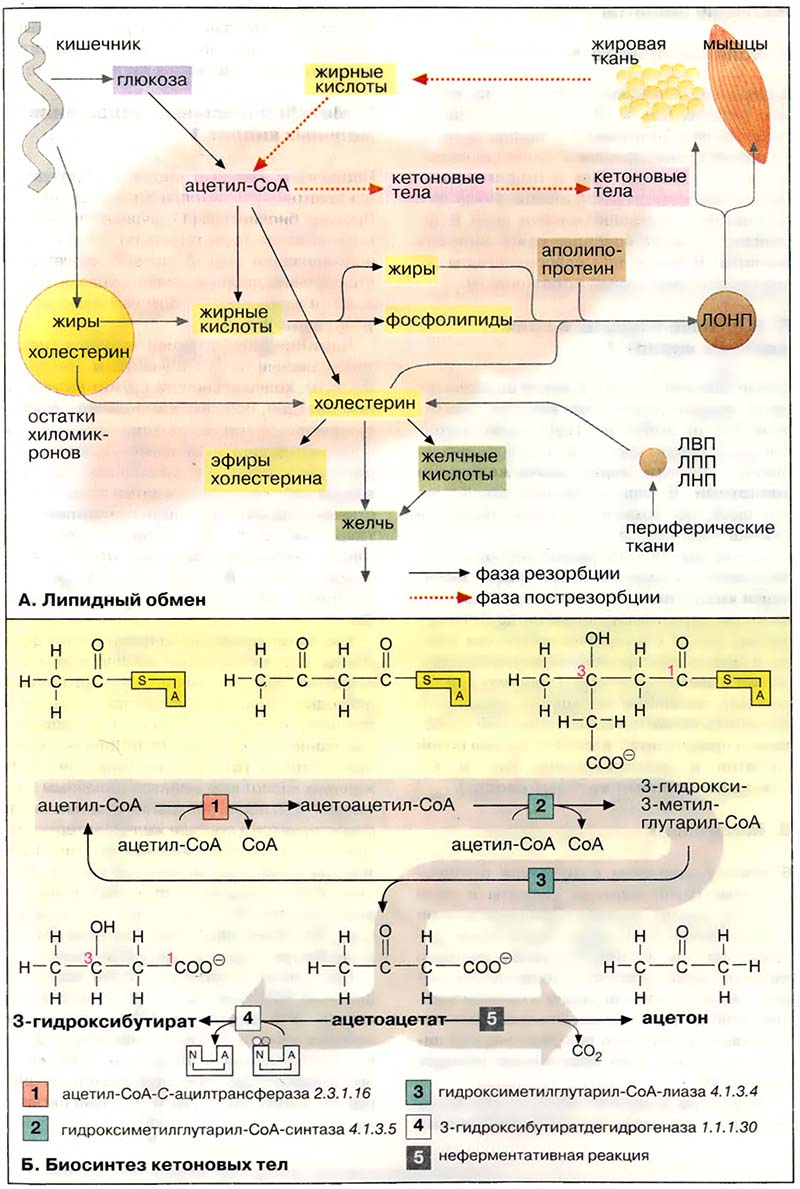
Обмен липидов в печени тесно связан с превращением углеводов и аминокислот. При поступлении питательных веществ в фазе резорбции (см. Компенсаторные функции печени) глюкоза через промежуточное образование ацетил-КоА (ацетил-СоА) конвертируется в жирные кислоты. Печень может также извлекать жирные кислоты из липопротеинов, поступающих из желудочно-кишечного тракта (в виде хиломикронов) и других тканей (см. Липопротеины). Жирные кислоты используются для биосинтеза триглицеринов и фосфолипидов. При связывании жиров с аполипопротеинами образуются липопротеиновые комплексы очень низкой плотности [ЛОНП (VLDL)]. Они попадают в кровь и переносятся в другие ткани, прежде всего в жировую и мышечную ткань.
В фазе пострезорбции, особенно в период поста или голодания, обмен липидов идёт в обратном направлении, организм обращается к собственным запасам. В этих условиях жиры поступают из жировой ткани в кровь, переносятся в печень, распадаются в результате β-окисления до ацетил-КоА и, наконец, превращаются в кетоновые тела.
Холестерин поступает в организм из двух источников — с пищей и за счёт эндогенного синтеза, причём большая часть холестерина синтезируется в печени. Биосинтез холестерина начинается с ацетил-КоА (см. Водорастворимые витамины. II). Полученный холестерин используется в синтезе желчных кислот (см. Желчные кислоты), встраивается в клеточные мембраны (см. Биомембраны: структура и функции), депонируется в жировых каплях в составе эфиров жирных кислот. Остальная часть поступает в кровь в составе липопротеиновых комплексов [ЛОНП (VLDL)] и переносится в другие ткани. Печень способствует обмену холестерина благодаря тому, что служит местом, куда поступают с кровью и где подвергаются расщеплению липопротеиновые комплексы [ЛВП, ЛПП, ЛНН (HDL, IDL, LDL)]. содержащие холестерин и его эфиры с жирными кислотами.
В фазе пострезорбции, особенно в период поста или голодания, обмен липидов идёт в обратном направлении, организм обращается к собственным запасам. В этих условиях жиры поступают из жировой ткани в кровь, переносятся в печень, распадаются в результате β-окисления до ацетил-КоА и, наконец, превращаются в кетоновые тела.
Холестерин поступает в организм из двух источников — с пищей и за счёт эндогенного синтеза, причём большая часть холестерина синтезируется в печени. Биосинтез холестерина начинается с ацетил-КоА (см. Водорастворимые витамины. II). Полученный холестерин используется в синтезе желчных кислот (см. Желчные кислоты), встраивается в клеточные мембраны (см. Биомембраны: структура и функции), депонируется в жировых каплях в составе эфиров жирных кислот. Остальная часть поступает в кровь в составе липопротеиновых комплексов [ЛОНП (VLDL)] и переносится в другие ткани. Печень способствует обмену холестерина благодаря тому, что служит местом, куда поступают с кровью и где подвергаются расщеплению липопротеиновые комплексы [ЛВП, ЛПП, ЛНН (HDL, IDL, LDL)]. содержащие холестерин и его эфиры с жирными кислотами.
Статьи раздела «Метаболизм липидов»:
- Метаболизм липидов
- А. Метаболизм липидов
- Б. Биосинтез кетоновых тел
Структура:
Списки:
Сложность материала:
Величины и единицы:
Книги Список книг

 Жидкокристаллические дисперсии и наноконструкции ДНК
 Обобщены результаты, демонстрирующие многообразие конденсированных форм ...
 The Reef Aquarium: Science, Art, and Technology, Vol. 3
 The Reef Aquarium Volume Three: Science, Art, and Technology Reefkeeping science involves the interplay of biology, chemistry, and physics. However, a ...
