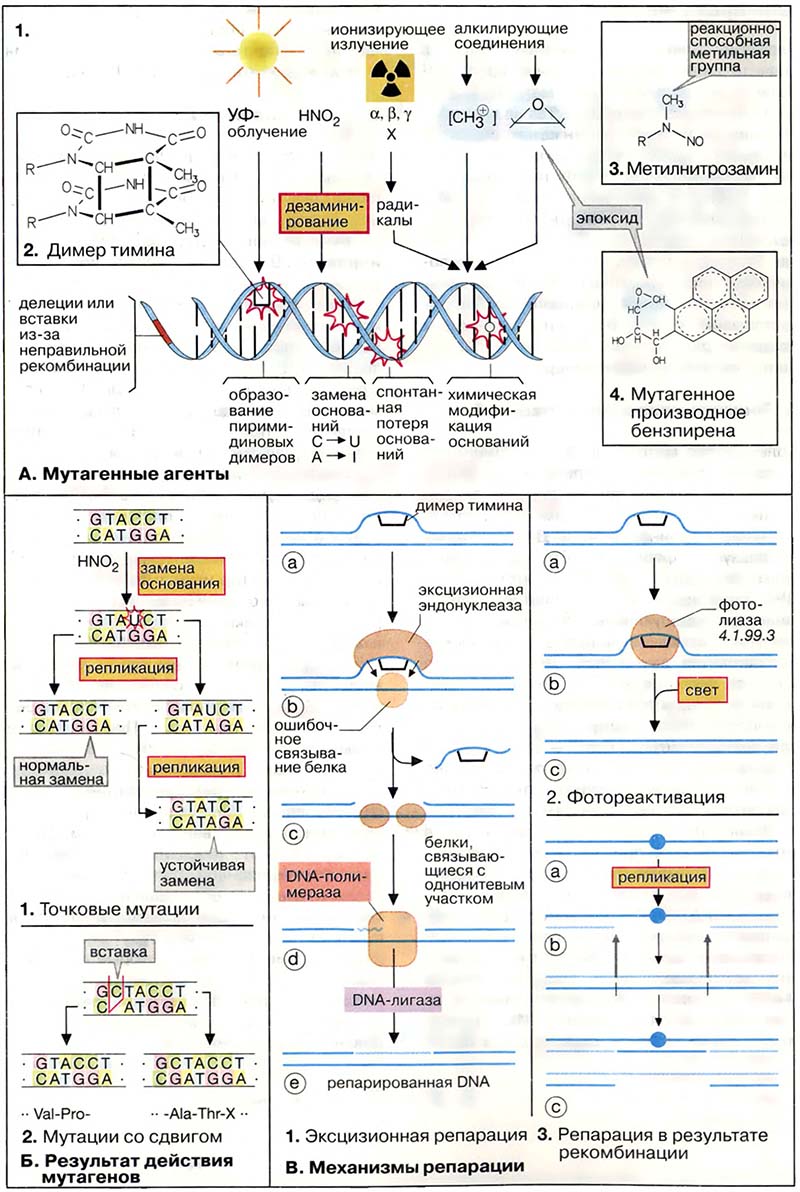
Важным механизмом удаления повреждений в ДНК является эксцизионная репарация (1). Специфическая нуклеаза удаляет небольшой сегмент ДНК, включающий повреждённый участок. Удалённый участок восстанавливается ДНК-полимеразой, использующей в качестве матрицы комплементарную цепь. Наконец, оставшийся одноцепочечный разрыв закрывается ДНК-лигазой. Тиминовые димеры могут быть удалены фотореактивацией (2). Специфическая фотолиаза связывается с дефектным участком ДНК и после облучения расщепляет димер с образованием отдельных нуклеиновых оснований.
Третий механизм — это репарация в результате рекомбинации (3, показано в упрощённом виде). В этом процессе участок, содержащий повреждение, пропускается во время репликации. Образующаяся брешь закрывается путём сдвига соответствующего сегмента из правильно реплицированной второй цепи. Новая брешь ликвидируется с участием полимераз и ДНК-лигаз. В завершение первоначальный дефект (1) устраняется путём вырезания.
Третий механизм — это репарация в результате рекомбинации (3, показано в упрощённом виде). В этом процессе участок, содержащий повреждение, пропускается во время репликации. Образующаяся брешь закрывается путём сдвига соответствующего сегмента из правильно реплицированной второй цепи. Новая брешь ликвидируется с участием полимераз и ДНК-лигаз. В завершение первоначальный дефект (1) устраняется путём вырезания.
Статьи раздела «Мутация и репарация»:
- Мутация и репарация
- А. Мутагенные агенты
- Б. Результат действия мутагенов
- В. Механизмы репарации
Структура:
Списки:
Сложность материала:
Величины и единицы:
Книги Список книг
 Metals in Medicine
 Working from basic chemical principles, Metals in Medicine presents a complete and methodical approach to the topic. Introductory chapters discuss ...

 Биофизическая химия. В 3 томах. Том 3
 В книге изложены представления о биологических макромолекулах и методах ...
