Поскольку функциональные белки клетки должны быть защищены от преждевременного протеолиза, часть протеолитических ферментов клетки заключена в липосомы (см. Лизосомы). Другая хорошо регулируемая система деградации белков локализована в цитоплазме. Она состоит из больших белковых комплексов (молекулярная масса 2×10⁶ Да), протеасом. Протеасомы содержат бочковидное ядро из 28 субъединиц и имеют коэффициент седиментации (см. Центрифугирование) 20S. Протеолитическая активность (на схеме показана в виде ножниц) локализована во внутреннем 208-ядре. С торцов бочки запираются сложно устроенными 19S-частицами, контролирующими доступ в ядро.
Белки, которым предстоит разрушение в протеасоме (например, содержащие ошибки транскрипции или состарившиеся молекулы), метятся путём ковалентного связывания с небольшим белком убиквитином. Убиквитин активирован благодаря наличию тиолсложноэфирной связи. Меченые убиквитином («убиквитинированные») молекулы распознаются 19S-частицами с потреблением АТФ и попадают в ядро, где происходит их деградация. Убиквитин не разрушается и после активации используется вновь
Белки, которым предстоит разрушение в протеасоме (например, содержащие ошибки транскрипции или состарившиеся молекулы), метятся путём ковалентного связывания с небольшим белком убиквитином. Убиквитин активирован благодаря наличию тиолсложноэфирной связи. Меченые убиквитином («убиквитинированные») молекулы распознаются 19S-частицами с потреблением АТФ и попадают в ядро, где происходит их деградация. Убиквитин не разрушается и после активации используется вновь
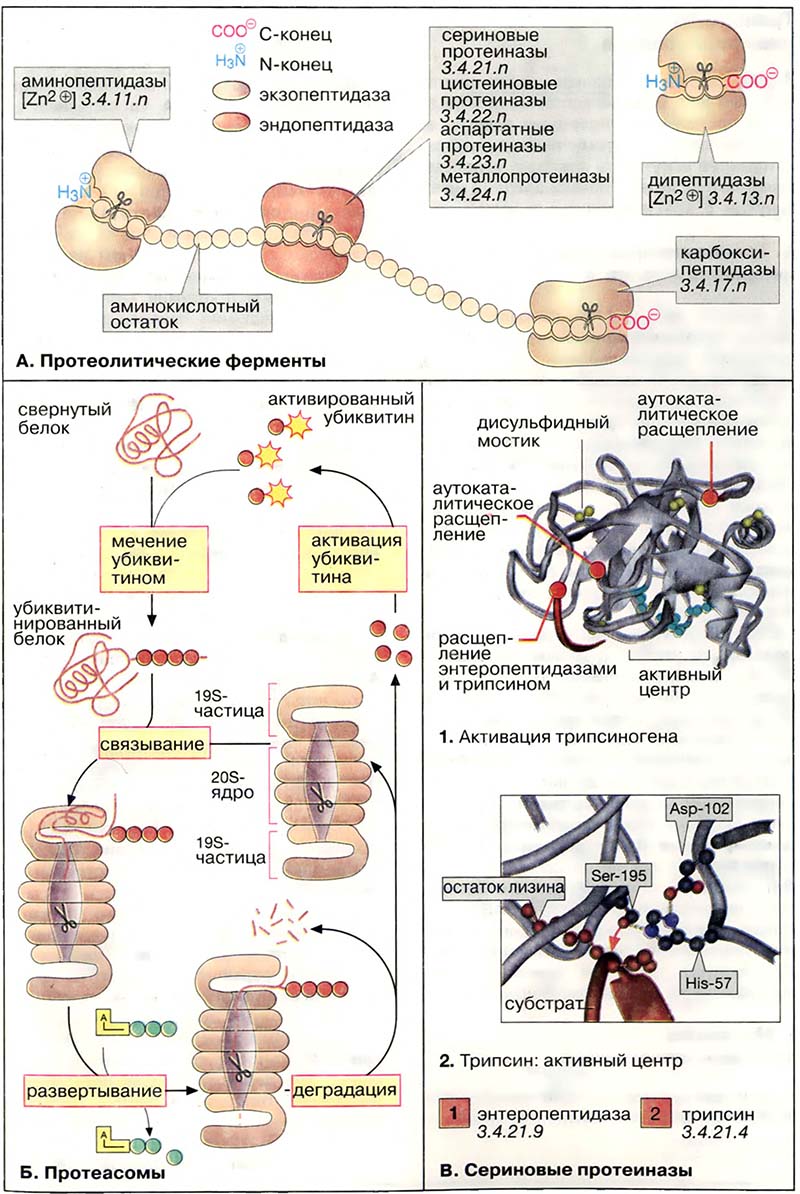
Статьи раздела «Протеолиз»:
- А. Протеолитические ферменты
- Б. Протеасомы
- В. Сериновые протеиназы
Структура:
Списки:
Сложность материала:
Величины и единицы:
Книги Список книг
 Stress — From Molecules to Behavior: A Comprehensive Analysis of the Neurobiology of Stress Responses
 This book comprehensively covers the molecular basis of stress responses of the nervous system, providing a unique and fundamental insight into the ...
 Review of Medical Microbiology and Immunology
 To put your preparation for USMLE Step 1 and course exams on the fast track, only one resource will do: «Review of Medical Microbiology and ...
 Лекции по природоведческой микробиологии
 Книга основана на курсе лекций, прочитанных в МГУ им. М. В. Ломоносова в 1995-2002 гг. ...
