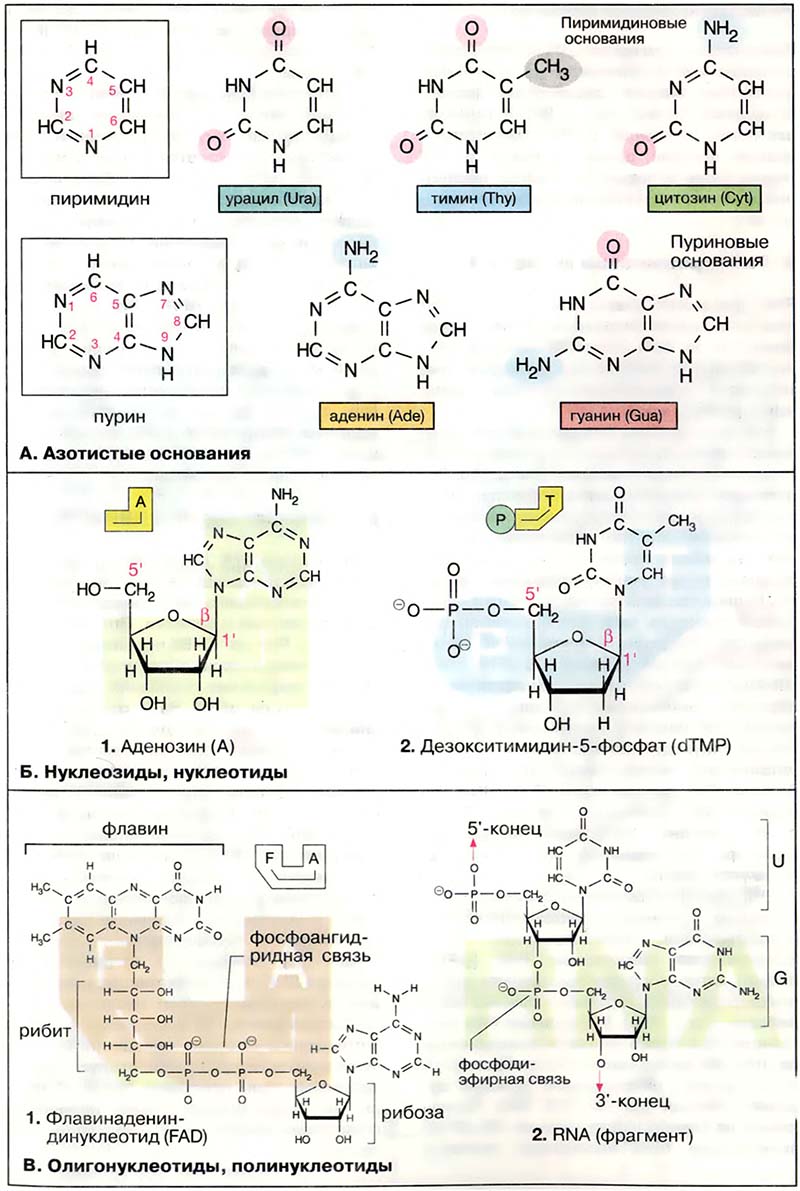
Азотистые основания — это ароматические гетероциклические соединения, производные пиримидина или пурина. Пять соединений этого класса являются основными структурными компонентами нуклеиновых кислот, общими для всей живой материи. Пуриновые основания аденин (Ade, но не A) и гуанин (Gua), а также пиримидиновое основание цитозин (Cyt), входят в состав ДНК и РНК. В состав ДНК входит также тимин (Thy), 5-метил-производное урацила. Основание урацил (Ura) входит только в состав РНК. В ДНК высших организмов в небольшом количестве присутствует 5-метилцитозин. Производные азотистых оснований присутствуют в тРНК (см. Рибонуклеиновые кислоты) и в других типах РНК.
Статьи раздела «Азотистые основания и нуклеотиды»:
Структура:
Списки:
Сложность материала:
Величины и единицы:
Книги Список книг
 Microarray Image Analysis: An Algorithmic Approach (Chapman & Hall/CRC Computer Science & Data Analysis)
 To harness the high-throughput potential of DNA microarray technology, it is crucial that the analysis stages of the process are decoupled from the ...
 Иммунология. Терминологический словарь
 Впервые в русскоязычной литературе системно изложены и даны толкования более 1 600 ...

 Биоэнергетика. Введение в хемиосмотическую теорию
 Книга известного английского биохимика посвящена хемиосмотической теории, ...