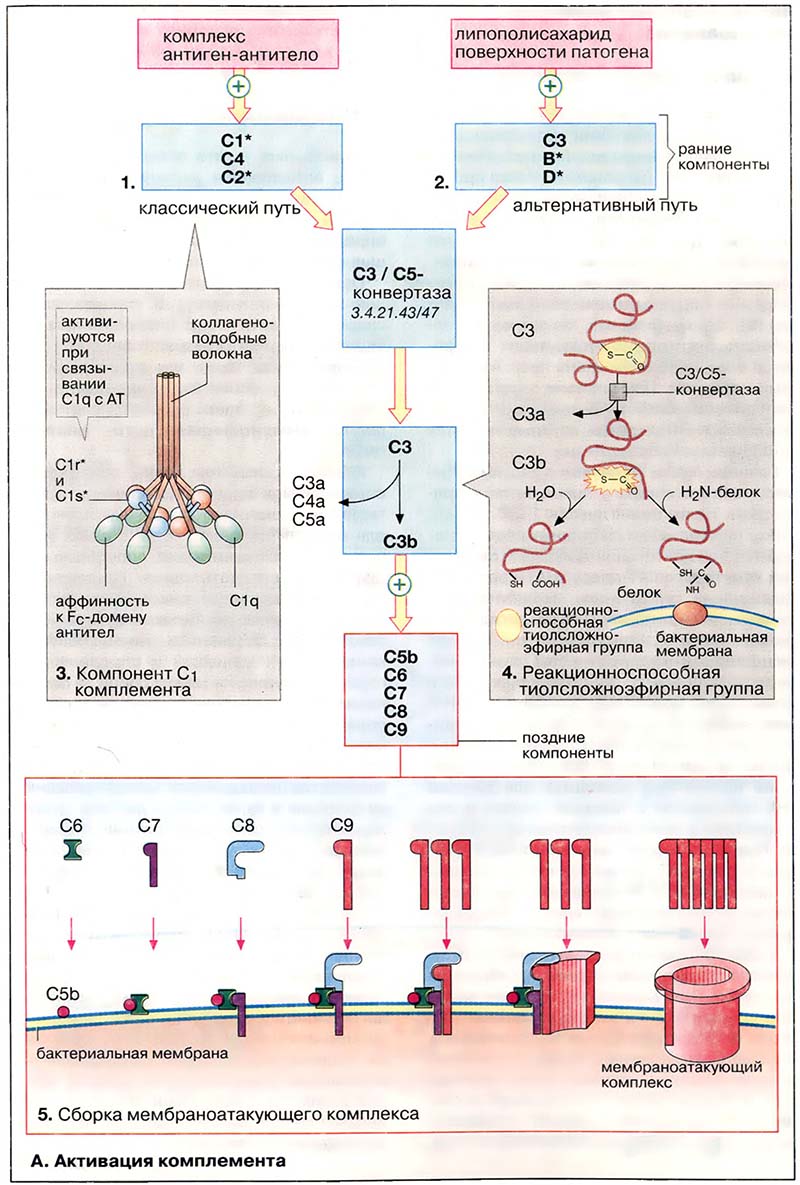
Система комплемента является частью иммунной системы, она осуществляет неспецифическую защиту от бактерий и других проникающих в организм возбудителей болезней. Система комплемента состоит примерно из 20 различных белков — «факторов (компонентов) комплемента», которые находятся в плазме крови и составляют около 4 % от всех белков плазмы.
Статьи раздела «Система комплемента»:
- Система комплемента
- А. Активация комплемента
Структура:
Списки:
Сложность материала:
Величины и единицы:
Книги Список книг
 Клеточные механизмы токсичности аммиака
 В настоящей книге авторы попытались кратко изложить исторически сложившиеся и ...
 История биологической химии. Истоки науки
 Книга посвящена первым шагам взаимодействия химии с биологией и медициной. В ней ...
 Жизнь молекул в экстремальных условиях. Горячий микромир Камчатки
 Книга посвящена исследованию вопроса о том, в каких предельных экстремальных ...
 Asphaltenes: Chemical Transformation during Hydroprocessing of Heavy Oils (Chemical Industries)
 During the upgrading of heavy petroleum, asphaltene is the most problematic impurity since it is the main cause of catalyst deactivation and sediments ...