Клеточные компоненты и цитоплазма

Бактерия Escherichia coli живёт в кишечнике млекопитающих как симбионт. Её структура и состав изучены достаточно хорошо.
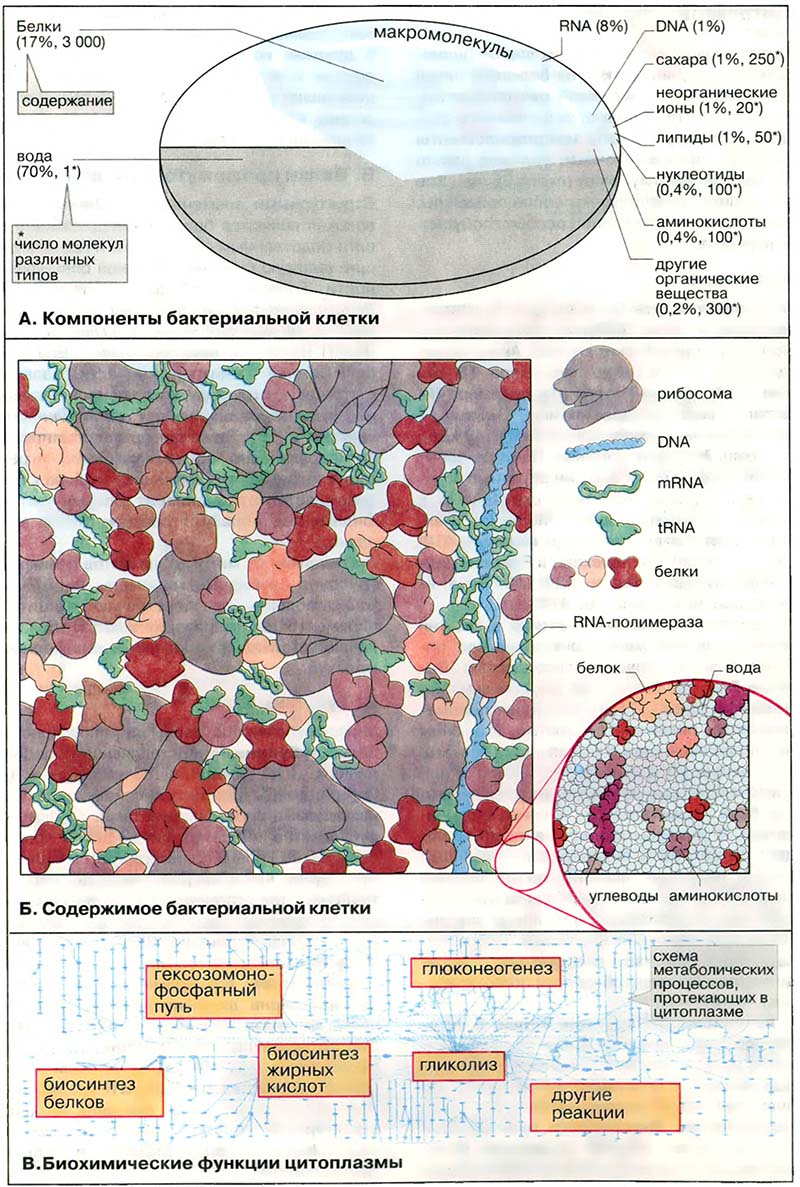

Организация клетки. Структура клеток / Клеточные компоненты и цитоплазма

Статьи раздела «Клеточные компоненты и цитоплазма»:

Следущая статья   |   — Вернуться в раздел


Молекулярное моделирование. Теория и практика / В научном издании, написанном учёными из Германии, Франции и Швейцарии, имеющими большую педагогическую практику, на современном уровне рассмотрены основные методы молекулярного моделирования и дизайна лекарственных веществ — бурно развивающейся области современной компьютерной химии. Изложены теореМолекулярное моделирование. Теория и практика
В научном издании, написанном учёными из Германии, Франции и Швейцарии, имеющими ...
Biotechnology Annual R Volume 14 (Biotechnology Annual Review) (Biotechnology Annual Review) / Biotechnology is a diverse, complex, and rapidly evolving field. Students and experienced researchers alike face the challenges of staying on top of developments in their field of specialty and maintaining a broader overview of the field as a whole. This latest volume of Biotechnology Annual Review Biotechnology Annual R Volume 14 (Biotechnology Annual Review) (Biotechnology Annual Review)
Biotechnology is a diverse, complex, and rapidly evolving field. Students and experienced researchers alike face the challenges of staying on top of ...
Physical Properties of Macromolecules / Explains and analyzes polymer physical chemistry research methods and experimental data Taking a fresh approach to polymer physical chemistry, Physical Properties of Macromolecules integrates the two foundations of physical polymer science, theory and practice. It provides the tools to understand poPhysical Properties of Macromolecules
Explains and analyzes polymer physical chemistry research methods and experimental data Taking a fresh approach to polymer physical chemistry, ...
NMR Studies of Structural Motifs: Protein Folding and Ligand Binding / NMR of Structural Motifs: The agrin G3 domain is critical in development and maintenance of the neuromuscular junction. G3 binds -dystroglycan and initiates acetylcholine receptor clustering on myotube membranes. Using NMR spectroscopy, we show both active B8 and inactive B0 isoforms binding sialic NMR Studies of Structural Motifs: Protein Folding and Ligand Binding
NMR of Structural Motifs: The agrin G3 domain is critical in development and maintenance of the neuromuscular junction. G3 binds -dystroglycan and ...