Бактерии семейства Halobacterium растут при крайне высоких концентрациях соли, например в морской воде. Плазматическая мембрана этих бактерий содержит белок, подобный родопсину глаза (см. Механизм зрительного восприятия) и потому названный бактериородопсином. Этот белок способен непосредственно использовать энергию солнечного света для создания электрохимического градиента (см. Сохранение энергии на мембранах). В основе процесса, как и при зрительном процессе, лежит индуцируемая светом цис-транс-изомеризация ретиналя.
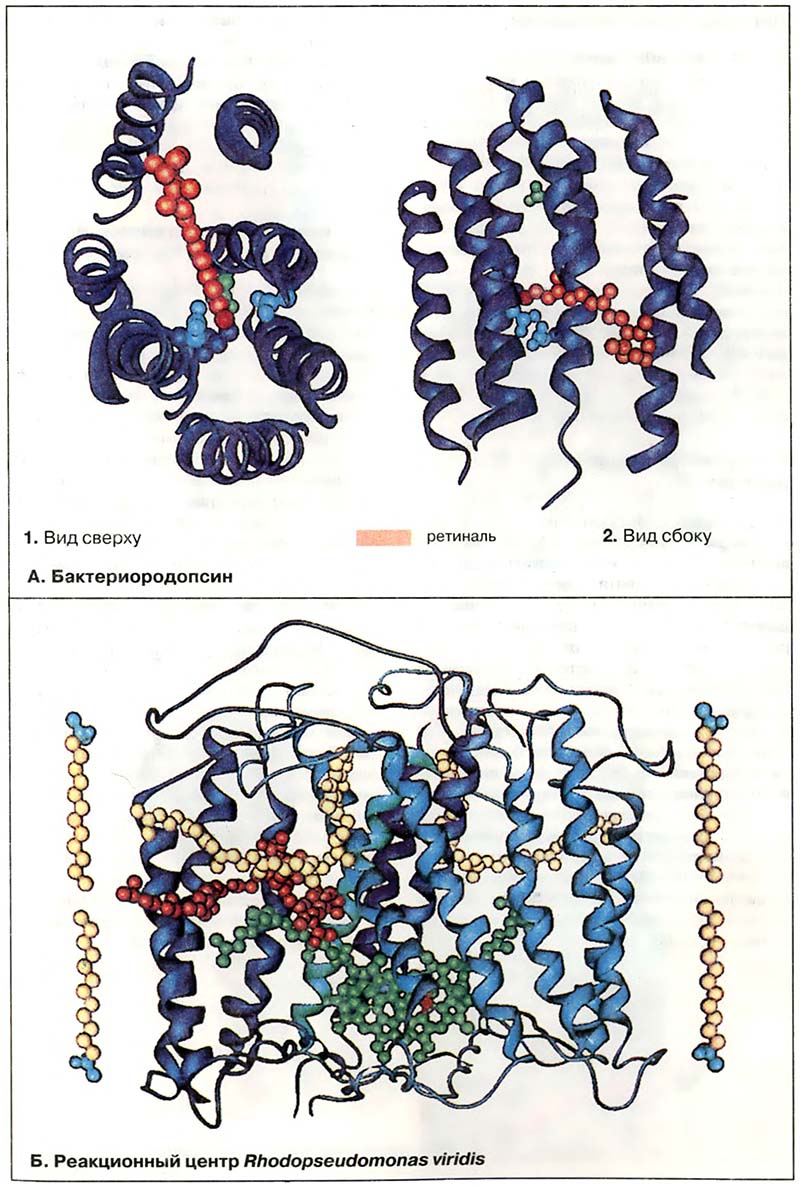
Белковая часть молекулы бактериородопсина в основном состоит из 7 α-спиралей (голубого цвета), пронизывающих мембрану и образующих полый цилиндр. Остальная часть молекулы и боковые цепи аминокислот не представлены. Внутри цилиндра расположена молекула ретиналя (оранжевого цвета), ковалентно связанная альдегидной группой с ε-аминогруппой остатка лизина (красного цвета). В темноте ретиналь находится в полностью транс-форме, а альдиминная группа протонирована. При освещении ретиналь перегруппировывается в 13-цис-форму, а альдиминная группа отдаёт протон, который «откачивается» наружу двумя аспартатными остатками (светло-голубого цвета; на рис. 2 внизу). После возвращения ретиналя в полностью транс-форму альдиминная группа снова связывает протон. Внутриклеточный протон (2, вверху) переносится через другой аспартатный остаток (зелёного цвета) к ретиналю.
Белковая часть молекулы бактериородопсина в основном состоит из 7 α-спиралей (голубого цвета), пронизывающих мембрану и образующих полый цилиндр. Остальная часть молекулы и боковые цепи аминокислот не представлены. Внутри цилиндра расположена молекула ретиналя (оранжевого цвета), ковалентно связанная альдегидной группой с ε-аминогруппой остатка лизина (красного цвета). В темноте ретиналь находится в полностью транс-форме, а альдиминная группа протонирована. При освещении ретиналь перегруппировывается в 13-цис-форму, а альдиминная группа отдаёт протон, который «откачивается» наружу двумя аспартатными остатками (светло-голубого цвета; на рис. 2 внизу). После возвращения ретиналя в полностью транс-форму альдиминная группа снова связывает протон. Внутриклеточный протон (2, вверху) переносится через другой аспартатный остаток (зелёного цвета) к ретиналю.
Статьи раздела «Молекулярные модели фотосистемы»:
- Молекулярные модели фотосистем
- А. Бактериородопсин
- Б. Реакционный центр Rhodopseudomonas viridis
Структура:
Списки:
Сложность материала:
Величины и единицы:
Книги Список книг

 Books a la Carte Plus for Microbiology with Diseases by Taxonomy (3rd Edition)
 The Third Edition of Microbiology with Diseases by Taxonomy is the most cutting-edge microbiology book available, offering unparalleled currency, ...
 Физика белка. Курс лекций с цветными и стереоскопическими иллюстрациями и задачами
 Физика белка простирается от классификации и принципов устройства белков ...
 Фотосинтез: физико-химический подход
 Подробно обосновывается предложенная автором (1995) принципиально новая концепция ...