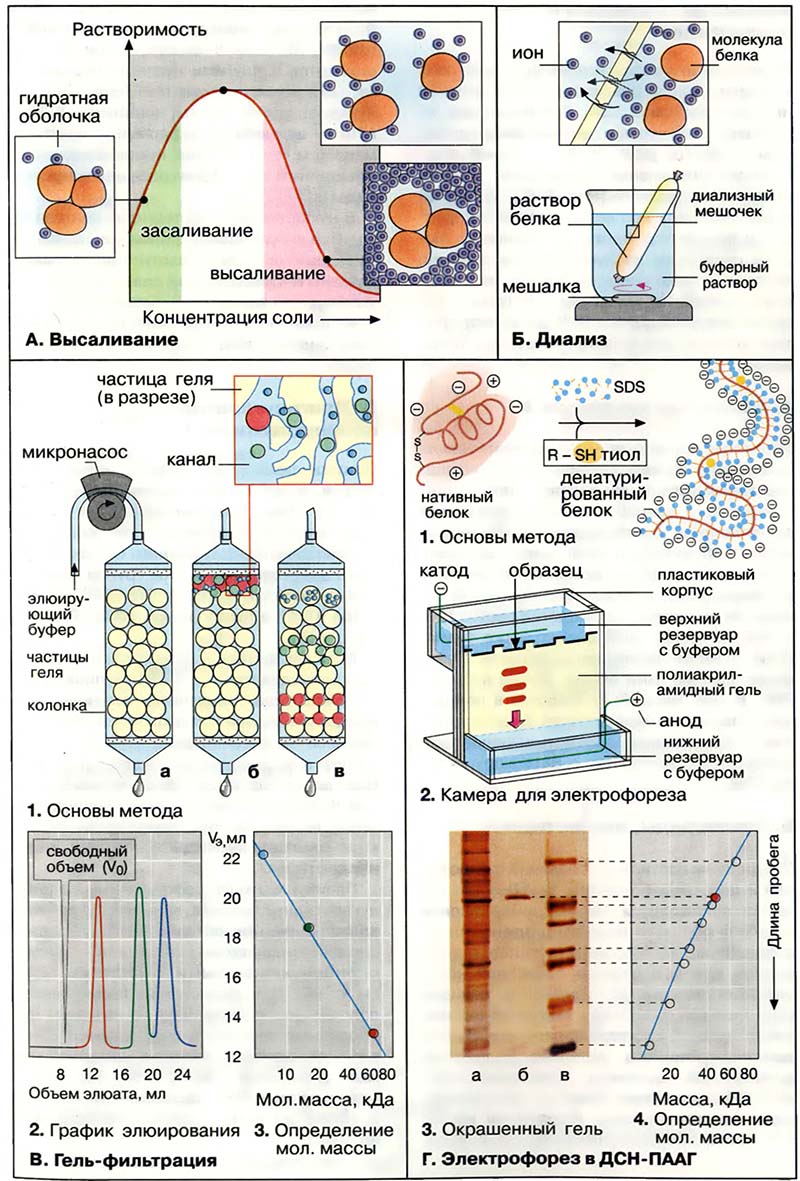
Растворимость белков сильно зависит от концентрации солей (от ионной силы). В дистиллированной воде белки чаще всего растворяются плохо, однако их растворимость возрастает по мере увеличения ионной силы. При этом все большее количество гидратированных неорганических ионов (светло-синие кружочки) связывается с поверхностью белка и тем самым уменьшается степень его агрегации (засаливание). При высокой ионной силе молекулы белков лишаются гидратирующих оболочек, что приводит к агрегации и выпадению белка в осадок (высаливание). Используя различие в растворимости, можно с помощью обычных солей, например (NH4)2SO4, разделить (фракционировать) смесь белков.
Статьи раздела «Методы выделения и анализа белков»:
Структура:
Списки:
Сложность материала:
Величины и единицы:
Книги Список книг
 Интеллектуальные липидные наноконтейнеры в адресной доставке лекарственных веществ
 Настоящая книга рассказывает о новейших достижениях в использовании липидов и ...

 История биологической химии. Формирование биохимии
 Книга посвящена истории формирования классической биохимии в период с середины ...
 Инфракрасные спектры сложных молекул
 В книге даётся богатейший, хорошо систематизированный справочный материал по ...