Источники энергии

Ткани и органы. Мышцы
А. Энергетический обмен в мышечной ткани

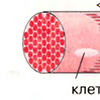
Важнейшей функцией мышечного волокна является сократительная. Процесс сокращения и расслабления связан с потреблением АТФ (АТР), гидролиз которого катализирует миозин-АТФ-аза [1] (см. Сократительная система). Однако небольшой запас АТФ, ...

А. Энергетический обмен в мышечной ткани

Биохимия человека (комплект из 2 книг) / Настоящий учебник биологической и медицинской химии и молекулярной биологии широко известен в мире и переведён на многие языки. Авторы 21-го переработанного издания — учёные из США, Великобритании и Канады. Благодаря энциклопедической полноте и чёткости изложения книга может служить справочным пособБиохимия человека (комплект из 2 книг)
Настоящий учебник биологической и медицинской химии и молекулярной биологии ...
Biological Aging: Methods and Protocols / Biological Aging: Methods and Protocols investigates the various processes that are affected by the age of an organism. Several new tools for the analysis of biological aging have been introduced recently, and this volume provides methods and protocols for these new techniques in addition to its covBiological Aging: Methods and Protocols
Biological Aging: Methods and Protocols investigates the various processes that are affected by the age of an organism. Several new tools for the ...
Histone H1 glycation and rutin metabolites as glycation inhibitors: Nuclear protein glycation in vivo and novel natural product AGE inhibitors / Protein glycation, induced by hyperglycemia, is implicated in the appearance of diabetic complications and the aging process. Glycation involves the non-enzymatic reaction between sugars and protein amino groups that lead to formation of advanced glycation end products (AGEs). When aminoguanidine, aHistone H1 glycation and rutin metabolites as glycation inhibitors: Nuclear protein glycation in vivo and novel natural product AGE inhibitors
Protein glycation, induced by hyperglycemia, is implicated in the appearance of diabetic complications and the aging process. Glycation involves the ...
Asphaltenes: Chemical Transformation during Hydroprocessing of Heavy Oils (Chemical Industries) / During the upgrading of heavy petroleum, asphaltene is the most problematic impurity since it is the main cause of catalyst deactivation and sediments formation. Exploring many aspects related to asphaltenes composition and conversion, Asphaltenes: Chemical Transformation during Hydroprocessing of HAsphaltenes: Chemical Transformation during Hydroprocessing of Heavy Oils (Chemical Industries)
During the upgrading of heavy petroleum, asphaltene is the most problematic impurity since it is the main cause of catalyst deactivation and sediments ...