В моче присутствуют катионы Na+, K+, Ca2+, Mg2+ и NH4+, анионы Cl-, SO42- и HPO42- и в следовых количествах другие ионы. Содержание кальция и магния в фекалиях существенно выше, чем в моче. Количество неорганических веществ в значительной степени зависит от характера питания. При ацидозе может сильно повыситься экскреция аммиака (см. Экскреция протонов и аммиака). Выведение многих ионов регулируется гормонами (см. Эндокринная функция почек).
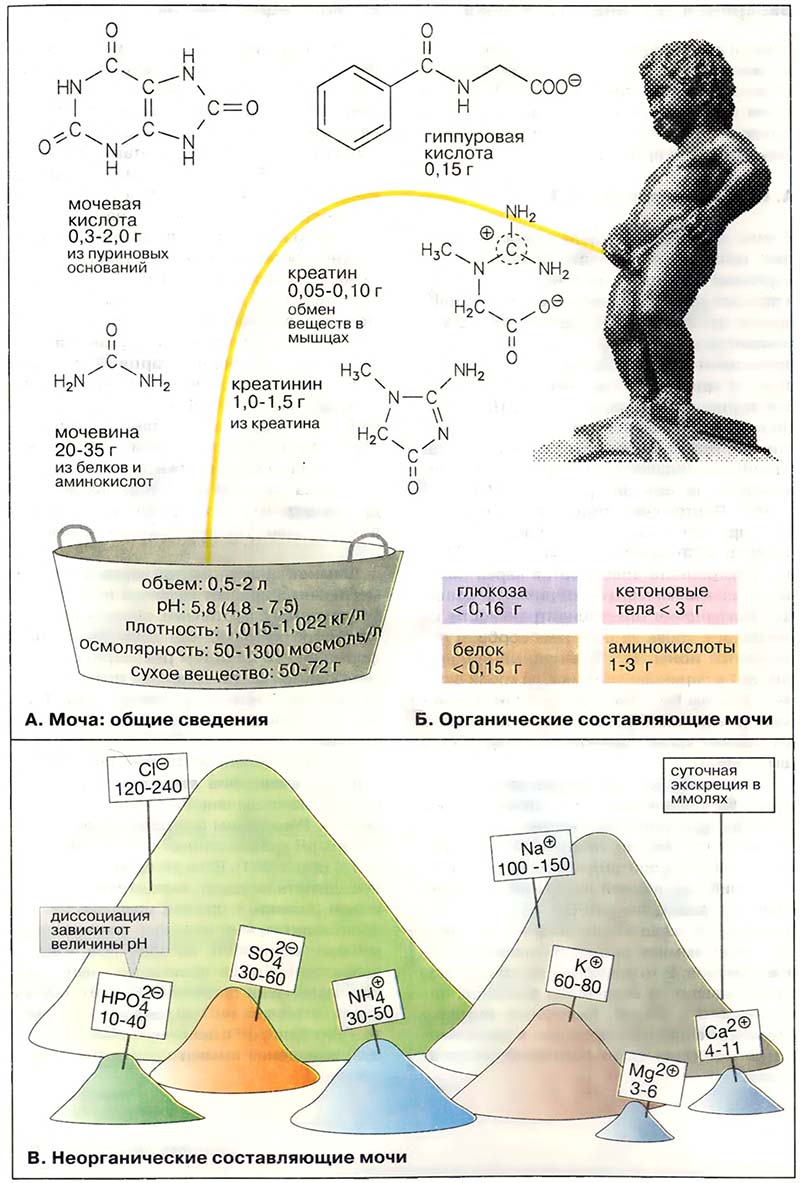
Статьи раздела «Моча»:
- А. Общие сведения
- Б. Органические составляющие мочи
- В. Неорганические составляющие мочи
- Дополнительная информация
Структура:
Списки:
Сложность материала:
Величины и единицы:
Книги Список книг
 Введение в молекулярную биологию
 Задача предлагаемой книги состоит в ознакомлении читателей с важнейшими фактами ...
 Культура животной ткани вне организма
 В стенограмме публичной лекции характеризуется метод тканевых культур и ...
 Саморегулируемые волны химических реакций и биологических популяций
 Монография посвящена математическому моделированию и исследованию нелинейных ...
 How to Build a Dinosaur: The New Science of Reverse Evolution
 A world-renowned paleontologist reveals groundbreaking science that trumps science fiction: how to grow a living dinosaur Over a decade after Jurassic ...