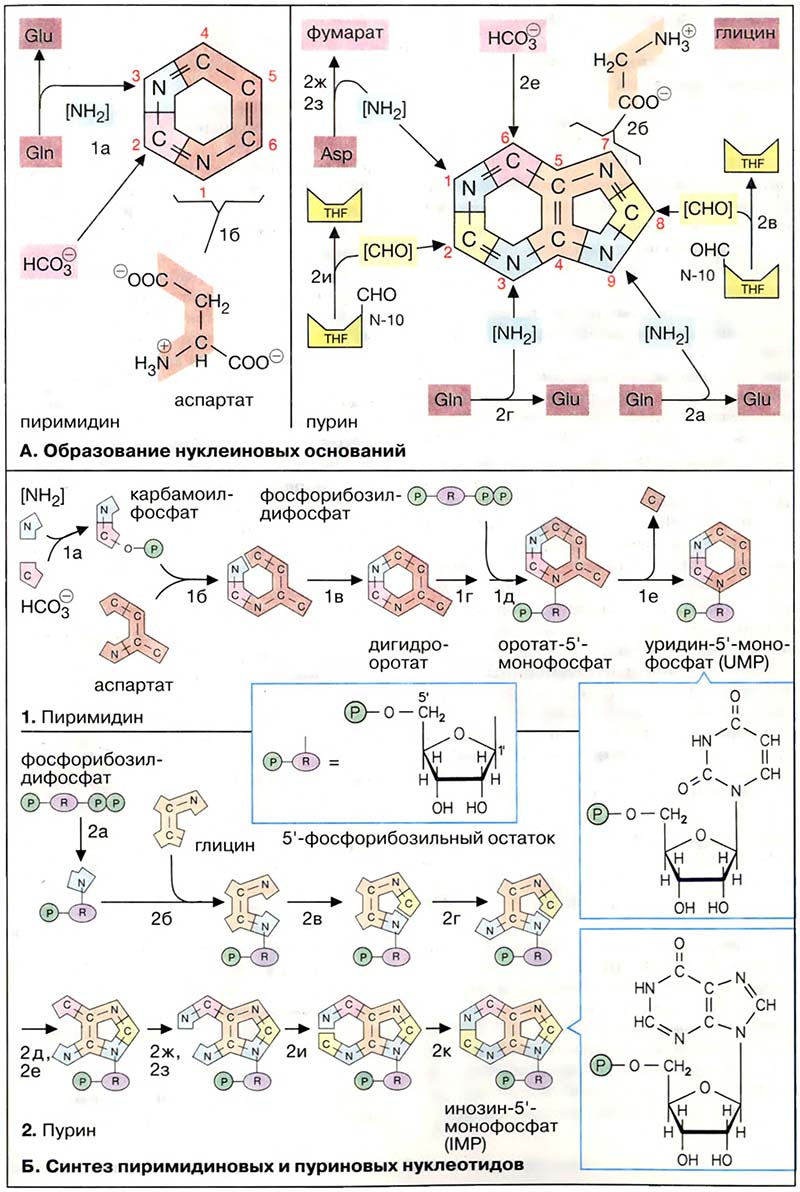
Пиримидиновое кольцо собирается из трёх компонентов: атомы азота N-1 и углерода с C-4 по C-6 поставляются аспартатом. C-2 происходит из HCO3-, а второй атом азота (N-3) — из амидной группы глутамина.
Синтез пуринового кольца идёт сложнее: единственным крупным предшественником является глицин, из которого происходят C-4 и C-5, а также N-7. Все другие атомы кольца поставляются отдельно: C-6 происходит из HCO3-, амидная группа глутамина даёт атомы N-3 и N-9, донором аминогруппы для N-1 выступает аспартат, переходя, как и в цикле мочевины (см. Эйкозаноиды), в фумарат. Наконец, атомы углерода C-2 и C-8 происходят из формильной группы N10-формилтетрагидрофолата (см. Коферменты переноса групп).
Синтез пуринового кольца идёт сложнее: единственным крупным предшественником является глицин, из которого происходят C-4 и C-5, а также N-7. Все другие атомы кольца поставляются отдельно: C-6 происходит из HCO3-, амидная группа глутамина даёт атомы N-3 и N-9, донором аминогруппы для N-1 выступает аспартат, переходя, как и в цикле мочевины (см. Эйкозаноиды), в фумарат. Наконец, атомы углерода C-2 и C-8 происходят из формильной группы N10-формилтетрагидрофолата (см. Коферменты переноса групп).
Статьи раздела «Биосинтез пуринов и пиримидинов»:
- Биосинтез пуринов и пиримидинов
- А. Образование нуклеиновых оснований
- Б. Биосинтез пиримидиновых и пуриновых нуклеотидов
- Дополнительная информация
Структура:
Списки:
Сложность материала:
Величины и единицы:
Книги Список книг

 История биологической химии. Институционализация биохимии
 Книга посвящена вопросам истории формирования научных организаций в области ...
 Влияние тяжелых металлов на процессы биохимического окисления органических веществ
 В научной монографии рассмотрены основные направления очистки сточных вод, ...
 Биохимия человека (комплект из 2 книг)
 Настоящий учебник биологической и медицинской химии и молекулярной биологии ...