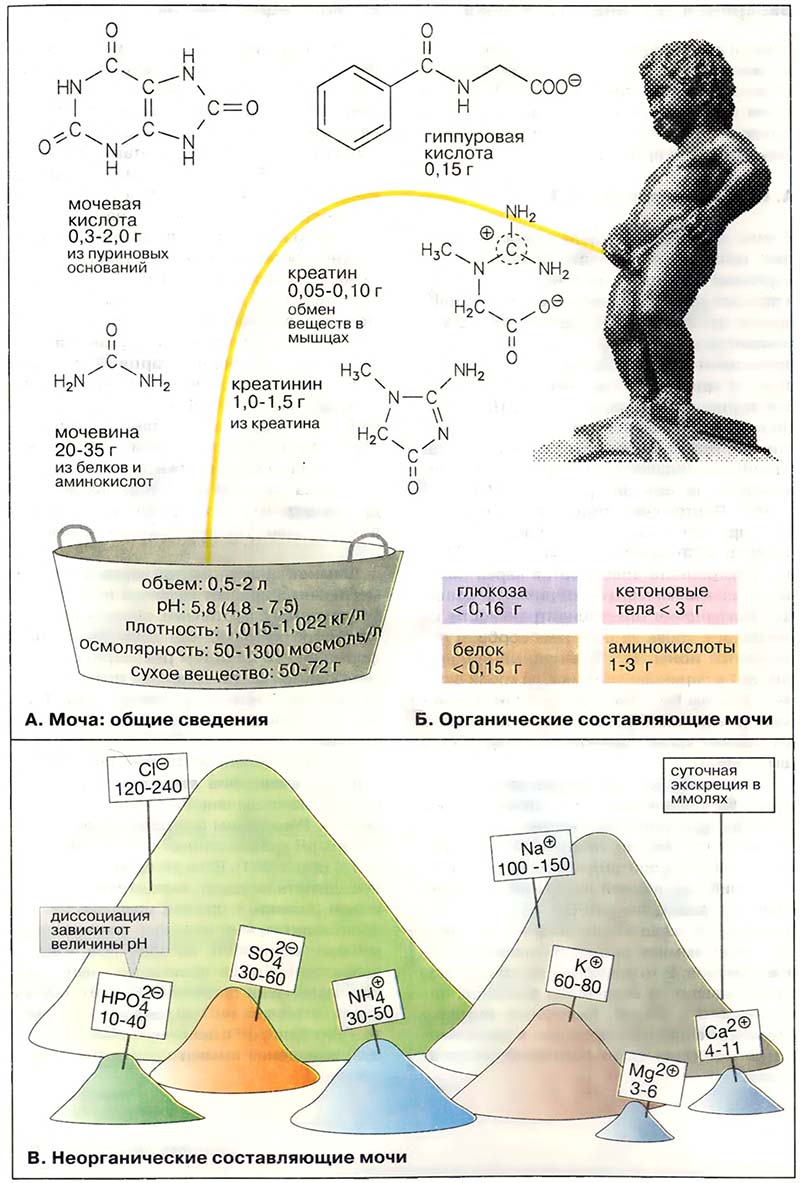
Изменения концентрации физиологических компонентов и появление патологических составляющих мочи используются для диагностики заболеваний. Например, при диабете в моче присутствуют глюкоза и кетоновые тела.
Статьи раздела «Моча»:
- А. Общие сведения
- Б. Органические составляющие мочи
- В. Неорганические составляющие мочи
- Дополнительная информация
Структура:
Списки:
Сложность материала:
Величины и единицы:
Книги Список книг
 Fundamentals of Forensic DNA Typing
 An introductory text on forensic DNA analysis, written by the foremost expert in the field.
 Структура и стабильность биологических макромолекул
 В книге рассмотрены строение и свойства биополимеров — в основном белков. Такие ...
 Молекулярные механизмы взаимодействия эндотоксинов с клетками-мишенями
 Открытие истинных рецепторов к эндотоксинам (липополисахаридам), сделанное на ...
 Books a la Carte Plus for Microbiology with Diseases by Taxonomy (3rd Edition)
 The Third Edition of Microbiology with Diseases by Taxonomy is the most cutting-edge microbiology book available, offering unparalleled currency, ...