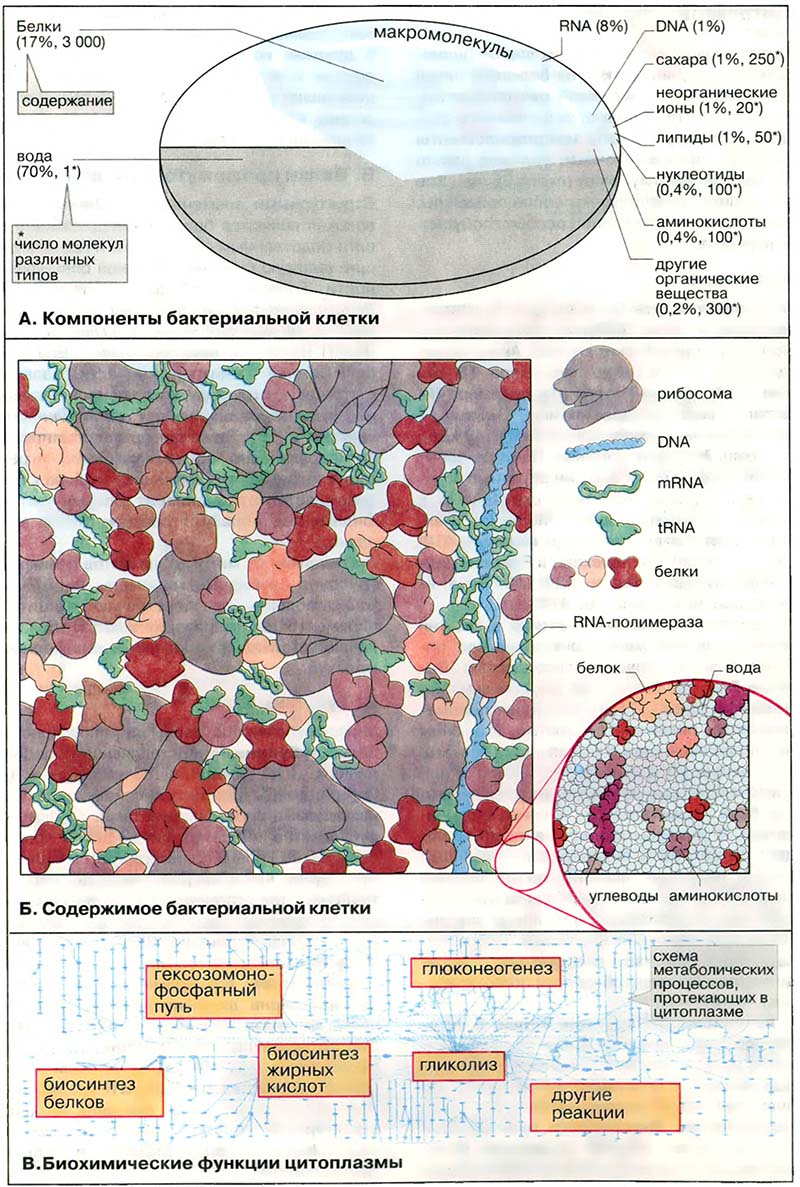
Основным компонентом всех клеток является вода (70 %). Остальная часть — это макромолекулы (белки, нуклеиновые кислоты, полисахариды), небольшие органические молекулы и неорганические ионы. Наиболее распространёнными из макромолекул являются белки, составляющие до 55 % сухого веса клетки.
Единичная клетка E. coli имеет объём около 0,88 мкм3. По одной шестой этого объёма составляют мембраны и ДНК (DNA) («нуклеоид»). Оставшееся внутреннее пространство заполнено цитоплазмой (не «цитозолем», см. Центрифугирование). С учётом ряда допущений относительно размера белков (средняя молекулярная масса 40 кДа) и их распределения в клетке можно считать, что цитоплазма клетки E. coli содержит приблизительно 250 000 белковых молекул. В эукариотических клетках, которые примерно в 1 000 раз больше, число белковых молекул можно оценить в несколько миллиардов.
Единичная клетка E. coli имеет объём около 0,88 мкм3. По одной шестой этого объёма составляют мембраны и ДНК (DNA) («нуклеоид»). Оставшееся внутреннее пространство заполнено цитоплазмой (не «цитозолем», см. Центрифугирование). С учётом ряда допущений относительно размера белков (средняя молекулярная масса 40 кДа) и их распределения в клетке можно считать, что цитоплазма клетки E. coli содержит приблизительно 250 000 белковых молекул. В эукариотических клетках, которые примерно в 1 000 раз больше, число белковых молекул можно оценить в несколько миллиардов.
Статьи раздела «Клеточные компоненты и цитоплазма»:
- Клеточные компоненты и цитоплазма
- А. Компоненты бактериальной клетки
- Б. Содержимое бактериальной клетки
- В. Биохимические функции цитоплазмы
- Цитоскелет: состав
Структура:
Списки:
Сложность материала:
Величины и единицы:
Книги Список книг
 How to Build a Dinosaur: The New Science of Reverse Evolution
 A world-renowned paleontologist reveals groundbreaking science that trumps science fiction: how to grow a living dinosaur Over a decade after Jurassic ...
 Планета вирусов
 Вирусы — невидимые, но активные участники борьбы за место в биосфере Земли. С их ...
 Введение в молекулярную биологию
 Книга представляет собой переработанный курс лекций, который авторы читают ...
 Молекула, жизнь, организм
 Учащиеся, прочитав эту книгу, смогут составить представление о том, что же такое ...