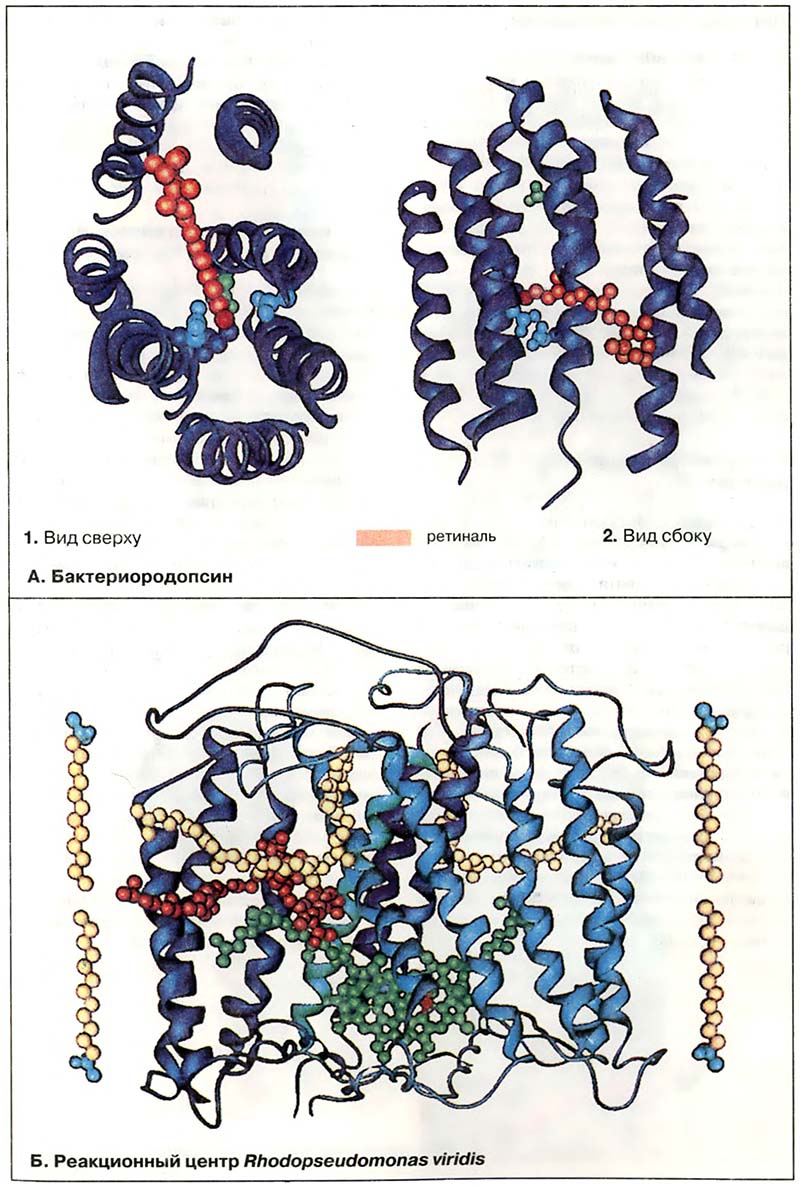
Фотосистема пурпурных бактерий Rhodopseudomonas viridis похожа по строению на фотосистему II высших растений. В отличие от растений в бактериальной системе донором электронов является не вода, а они поступают из электронпереносящей цепи, содержащей цитохром (на схеме не показано).
На схеме приведены только трансмембранные фрагменты бактериородопсина. О примерной толщине мембраны можно судить по липидным молекулам (слева и справа). Шесть трансмембранных спиралей из трёх субъединиц (показаны окрашенными в различные тона голубого цвета) формируют внутримембранное пространство, которое наполнено цепями молекул пигментов (несколько пигментов, которые не принимают непосредственного участия в электронном транспорте, опущено). Принцип фотосинтетического электронного транспорта обсуждается в статье Фотосинтез: световые реакции.
В Rh. viridis энергию света поглощают две соседние молекулы хлорофилла, образующие «специальную пару» (зелёного цвета, а ион Mg2+ — красного). Максимум поглощения этих молекул находится при 870 нм, поэтому бактериальный реакционный центр обозначается также P870.
После возбуждения электрон переносится реакционным центром на смежную свободную от магния молекулу феофитина (оранжевого цвета) всего за несколько пикосекунд (1 пс = 10-12 с), а затем в течение примерно 200 пс передаётся на прочно связанный хинон QA (слева наверху, жёлтого цвета). В то же самое время снова заполняется электронная дыра в «специальной паре». Через примерно 0,2 мс возбуждённый электрон достигает обмениваемого хинона QB (справа наверху, жёлтого цвета), с которым покидает фотосистему.
На схеме приведены только трансмембранные фрагменты бактериородопсина. О примерной толщине мембраны можно судить по липидным молекулам (слева и справа). Шесть трансмембранных спиралей из трёх субъединиц (показаны окрашенными в различные тона голубого цвета) формируют внутримембранное пространство, которое наполнено цепями молекул пигментов (несколько пигментов, которые не принимают непосредственного участия в электронном транспорте, опущено). Принцип фотосинтетического электронного транспорта обсуждается в статье Фотосинтез: световые реакции.
В Rh. viridis энергию света поглощают две соседние молекулы хлорофилла, образующие «специальную пару» (зелёного цвета, а ион Mg2+ — красного). Максимум поглощения этих молекул находится при 870 нм, поэтому бактериальный реакционный центр обозначается также P870.
После возбуждения электрон переносится реакционным центром на смежную свободную от магния молекулу феофитина (оранжевого цвета) всего за несколько пикосекунд (1 пс = 10-12 с), а затем в течение примерно 200 пс передаётся на прочно связанный хинон QA (слева наверху, жёлтого цвета). В то же самое время снова заполняется электронная дыра в «специальной паре». Через примерно 0,2 мс возбуждённый электрон достигает обмениваемого хинона QB (справа наверху, жёлтого цвета), с которым покидает фотосистему.
Статьи раздела «Молекулярные модели фотосистемы»:
- Молекулярные модели фотосистем
- А. Бактериородопсин
- Б. Реакционный центр Rhodopseudomonas viridis
Структура:
Списки:
Сложность материала:
Величины и единицы:
Книги Список книг
 Молекула, жизнь, организм
 Учащиеся, прочитав эту книгу, смогут составить представление о том, что же такое ...

 Gene Control
 Gene Control offers an articulate, current description of how gene expression is controlled in eukaryotes, reviewing and summarizing the extensive ...
