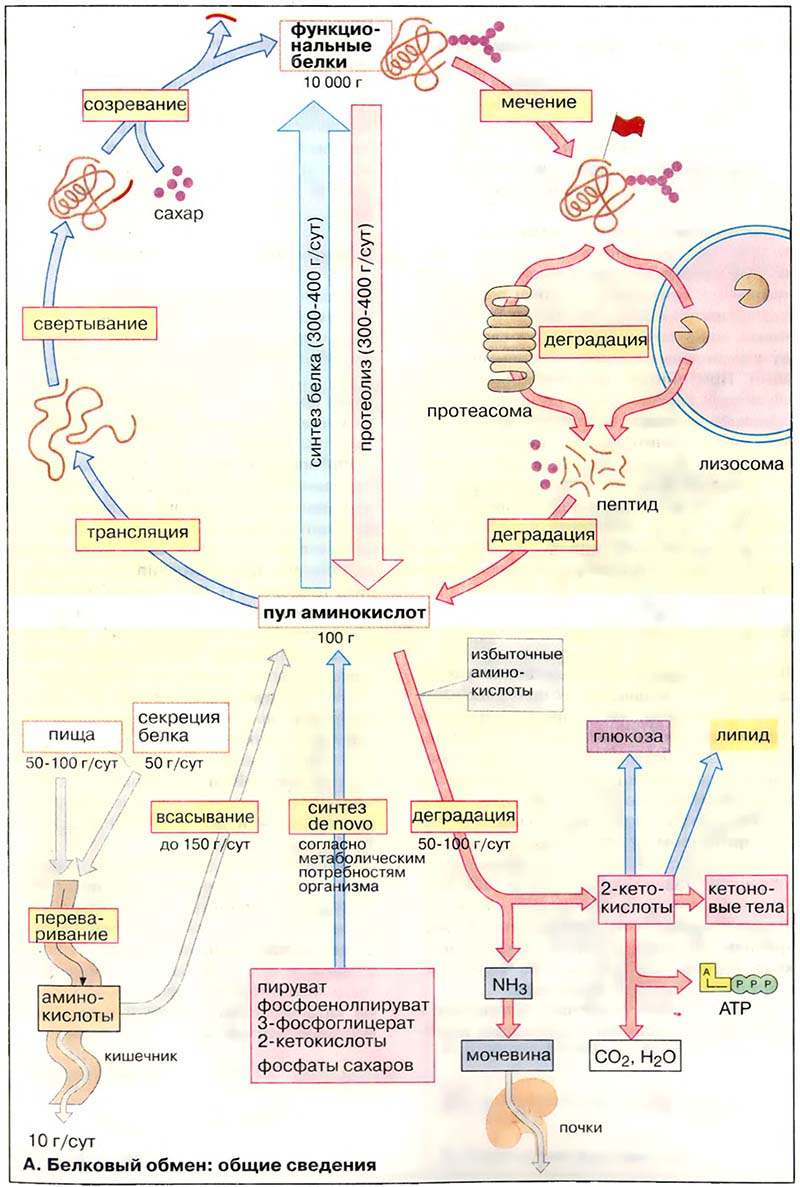
В количественном отношении белки образуют самую важную группу макромолекул. В организме человека массой 70 кг содержится примерно 10 кг белка, причём большая его часть локализована в мышцах. По сравнению с белками доля других азотсодержащих веществ в организме незначительна. Поэтому баланс азота в организме определяется метаболизмом белков, который регулируется несколькими гормонами, прежде всего тестостероном и кортизолом (см. Липофильные гормоны).
Статьи раздела «Белковый обмен: общие сведения»:
- Белковый обмен: общие сведения
- А. Белковый обмен: общие сведения
Структура:
Списки:
Сложность материала:
Величины и единицы:
Книги Список книг
 Molecular Biology of the Cell: The Problems Book
 The Problems Book helps students appreciate the ways in which experiments and simple calculations can lead to an understanding of how cells work by ...

 Microbiology with Diseases by Taxonomy with MasteringMicrobiology (3rd Edition)
 The Third Edition of Microbiology with Diseases by Taxonomy is the most cutting-edge microbiology book available, offering unparalleled currency, ...
 Введение в биофизическую химию
 Книга представляет собой руководство по биофизической химии, в котором кратко и ...