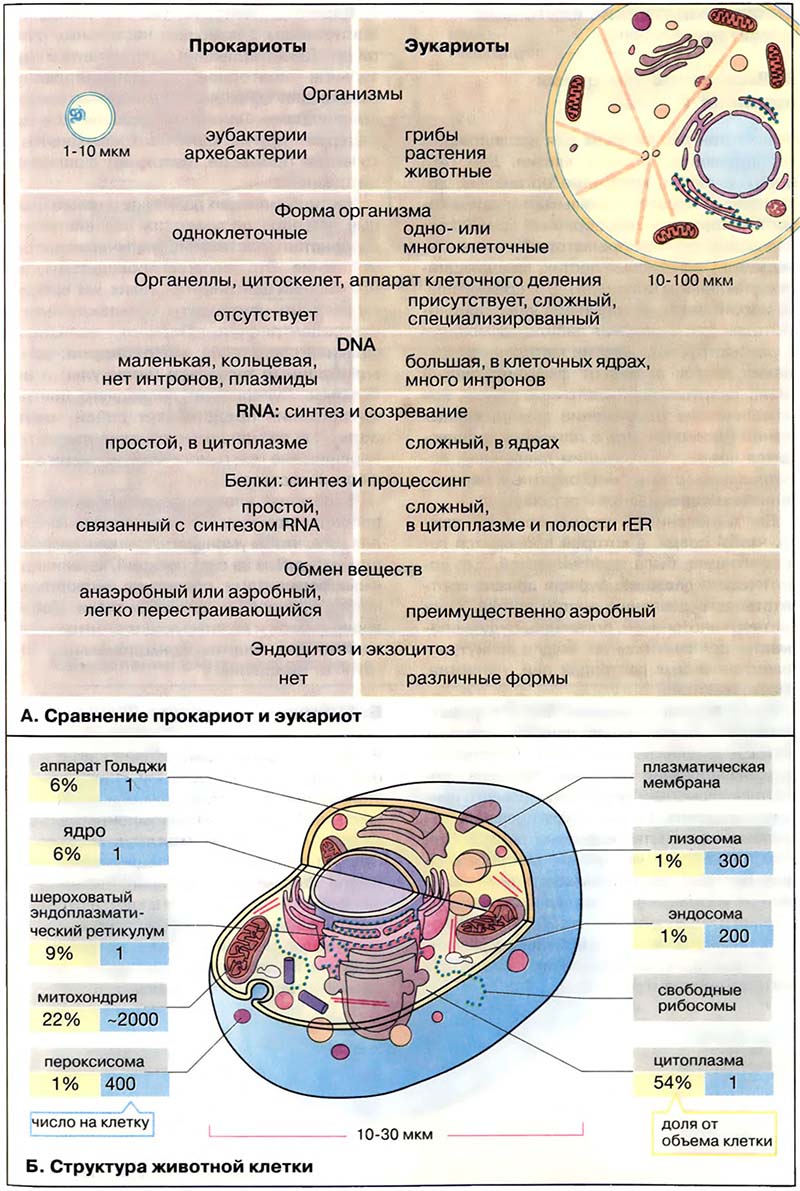
Существующие в настоящее время организмы подразделяются на две большие группы — прокариоты и эукариоты. К прокариотам относятся бактерии (эубактерии и архебактерии) а к эукариотам — грибы, растения и животные, большинство из которых являются многоклеточными организмами и только некоторые — одноклеточными. Многоклеточные эукариоты построены из разнообразных по своим функциям клеток, причём эти клетки значительно крупнее клеток прокариот (соотношение объёмов приблизительно 2000:1). Наиболее важный отличительный признак эукариотических клеток — наличие ядра (греч. karion; отсюда и название «эукариоты») и других органелл.
Структуры и функции эукариотических клеток сложнее и более специализированы, чем структуры и функции клеток прокариот. ДНК (DNA) эукариот представляют собой очень длинные линейные молекулы (от 107 до более чем 1010 пар оснований). Они локализованы в ядре, связаны с гистонами и включают некодирующие области (интроны). Напротив, ДНК прокариот представляют собой более короткие (до 5×10⁶ пар оснований) кольцевые молекулы, расположенные в цитоплазме и не имеющие интронов. Эукариотические клетки состоят из специализированных отделов — органелл. Процессы синтеза и созревания РНК (RNA) и белков протекают в различных отделах клеток и механизмы их регулирования не зависят один от другого. У прокариот, напротив, эти процессы значительно проще и взаимосвязаны.
Структуры и функции эукариотических клеток сложнее и более специализированы, чем структуры и функции клеток прокариот. ДНК (DNA) эукариот представляют собой очень длинные линейные молекулы (от 107 до более чем 1010 пар оснований). Они локализованы в ядре, связаны с гистонами и включают некодирующие области (интроны). Напротив, ДНК прокариот представляют собой более короткие (до 5×10⁶ пар оснований) кольцевые молекулы, расположенные в цитоплазме и не имеющие интронов. Эукариотические клетки состоят из специализированных отделов — органелл. Процессы синтеза и созревания РНК (RNA) и белков протекают в различных отделах клеток и механизмы их регулирования не зависят один от другого. У прокариот, напротив, эти процессы значительно проще и взаимосвязаны.
Статьи раздела «Структура клеток»:
- А. Сравнение прокариот и эукариот
- Б. Структура животной клетки
Структура:
Списки:
Сложность материала:
Величины и единицы:
Книги Список книг
 Новейшие методы исследования биосистем
 Книга охватывает широкий круг методов, таких как молекулярная динамика, ...
 Review of Medical Microbiology and Immunology
 To put your preparation for USMLE Step 1 and course exams on the fast track, only one resource will do: «Review of Medical Microbiology and ...
 Жизнь молекул в экстремальных условиях. Горячий микромир Камчатки
 Книга посвящена исследованию вопроса о том, в каких предельных экстремальных ...
