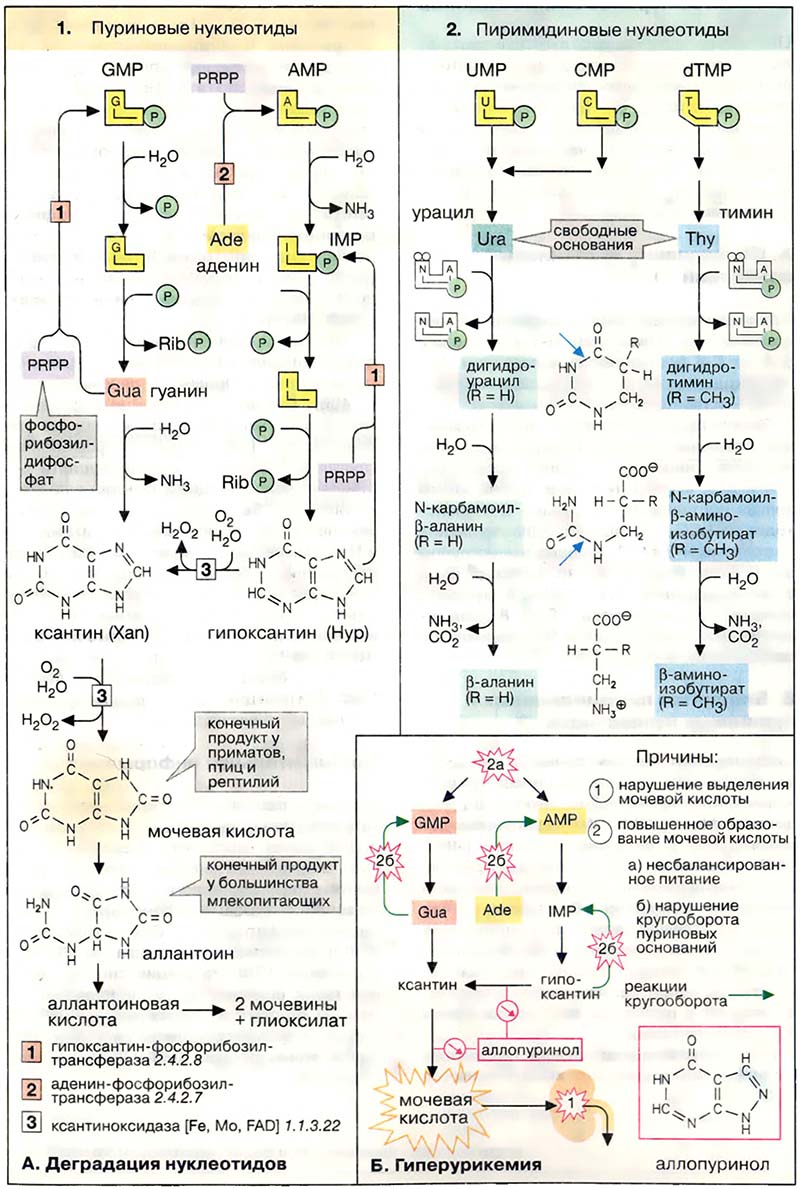
Нуклеотиды принадлежат к наиболее сложным метаболитам. Их биосинтез требует много времени и высоких затрат энергии (см. Биосинтез пуринов и пиримидинов). Поэтому понятно, что нуклеотиды не полностью разрушаются, а по большей части снова участвуют в синтезе. Прежде всего это относится к пуриновым основаниям аденину и гуанину. В организме высших животных около 90 % пуриновых оснований снова превращаются в нуклеозид-монофосфаты, связываясь с фосфорибозилдифосфатом (PRPP) (ферменты [1] и [2]). Участие пиримидиновых оснований в ресинтезе весьма незначительно.
Статьи раздела «Деградация нуклеотидов»:
- Деградация нуклеотидов
- А. Деградация нуклеотидов
- Б. Гиперурикемия
Структура:
Списки:
Сложность материала:
Величины и единицы:
Книги Список книг
 Планета вирусов
 Вирусы — невидимые, но активные участники борьбы за место в биосфере Земли. С их ...
 Объекты биологии развития
 Монография представляет собой вторую книгу из серии «Проблемы биологии ...
 История биологической химии. Истоки науки
 Книга посвящена первым шагам взаимодействия химии с биологией и медициной. В ней ...
 Физика белка. Курс лекций с цветными и стереоскопическими иллюстрациями и задачами
 Физика белка простирается от классификации и принципов устройства белков ...