Дезоксирибонуклеиновые кислоты

Биологическая функция нуклеиновых кислот (см. Молекулярная генетика: общие сведения) основана главным образом на свойстве оснований образовывать специфически (комплементарно) связанные пары.
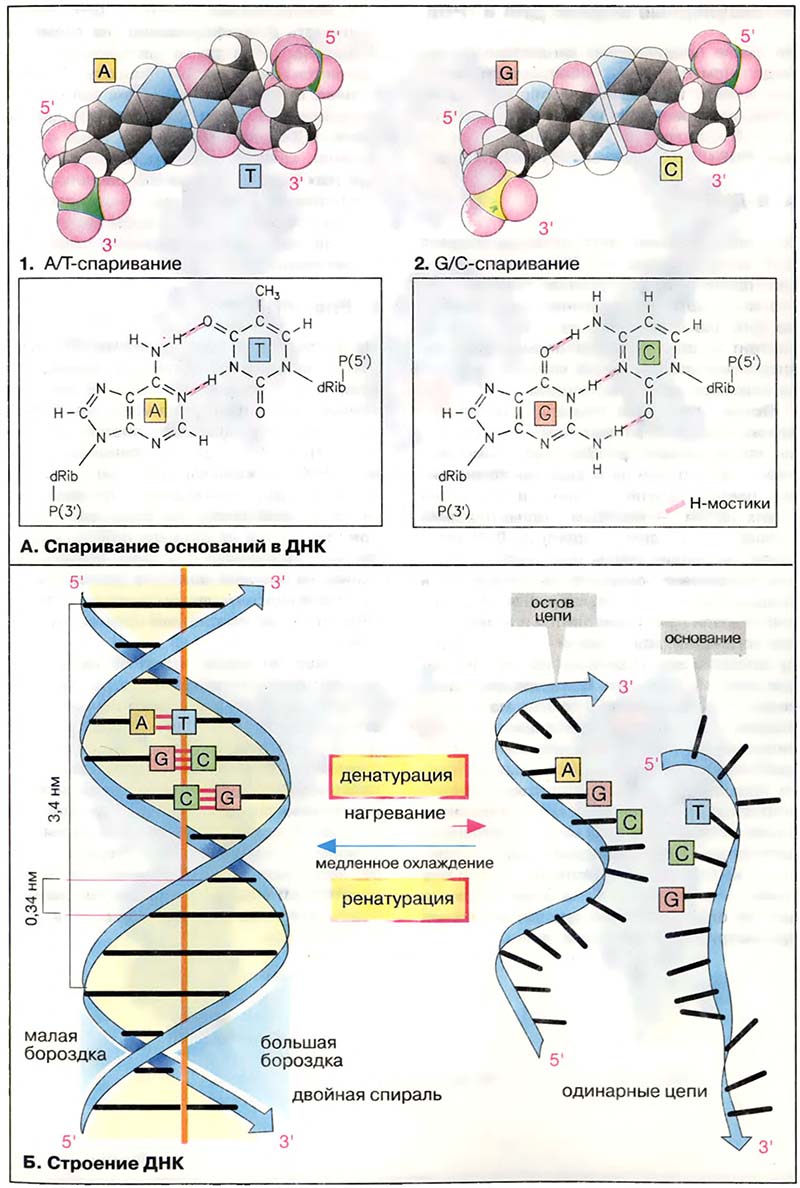

Биомолекулы. Нуклеиновые кислоты / Дезоксирибонуклеиновые кислоты

Статьи раздела «Дезоксирибонуклеиновые кислоты»:

Следущая статья   |   — Вернуться в раздел


Metals in Medicine / Working from basic chemical principles, Metals in Medicine presents a complete and methodical approach to the topic. Introductory chapters discuss important bonding concepts applicable to metallo-drugs and their biological targets, interactions that exist between the agents and substances in the bioMetals in Medicine
Working from basic chemical principles, Metals in Medicine presents a complete and methodical approach to the topic. Introductory chapters discuss ...
Паразитические нематоды растений и насекомых / В книге представлены обобщающие работы по современным теоретическим и прикладным проблемам фито- и энтомопаразитологии и материалы по истории развития фитопаразитологических исследований Института паразитологии РАН. Сборник включает работы по фауне, систематике, экологии и филогении наиболее патогенПаразитические нематоды растений и насекомых
В книге представлены обобщающие работы по современным теоретическим и ...
Physical Properties of Macromolecules / Explains and analyzes polymer physical chemistry research methods and experimental data Taking a fresh approach to polymer physical chemistry, Physical Properties of Macromolecules integrates the two foundations of physical polymer science, theory and practice. It provides the tools to understand poPhysical Properties of Macromolecules
Explains and analyzes polymer physical chemistry research methods and experimental data Taking a fresh approach to polymer physical chemistry, ...
Histone H1 glycation and rutin metabolites as glycation inhibitors: Nuclear protein glycation in vivo and novel natural product AGE inhibitors / Protein glycation, induced by hyperglycemia, is implicated in the appearance of diabetic complications and the aging process. Glycation involves the non-enzymatic reaction between sugars and protein amino groups that lead to formation of advanced glycation end products (AGEs). When aminoguanidine, aHistone H1 glycation and rutin metabolites as glycation inhibitors: Nuclear protein glycation in vivo and novel natural product AGE inhibitors
Protein glycation, induced by hyperglycemia, is implicated in the appearance of diabetic complications and the aging process. Glycation involves the ...