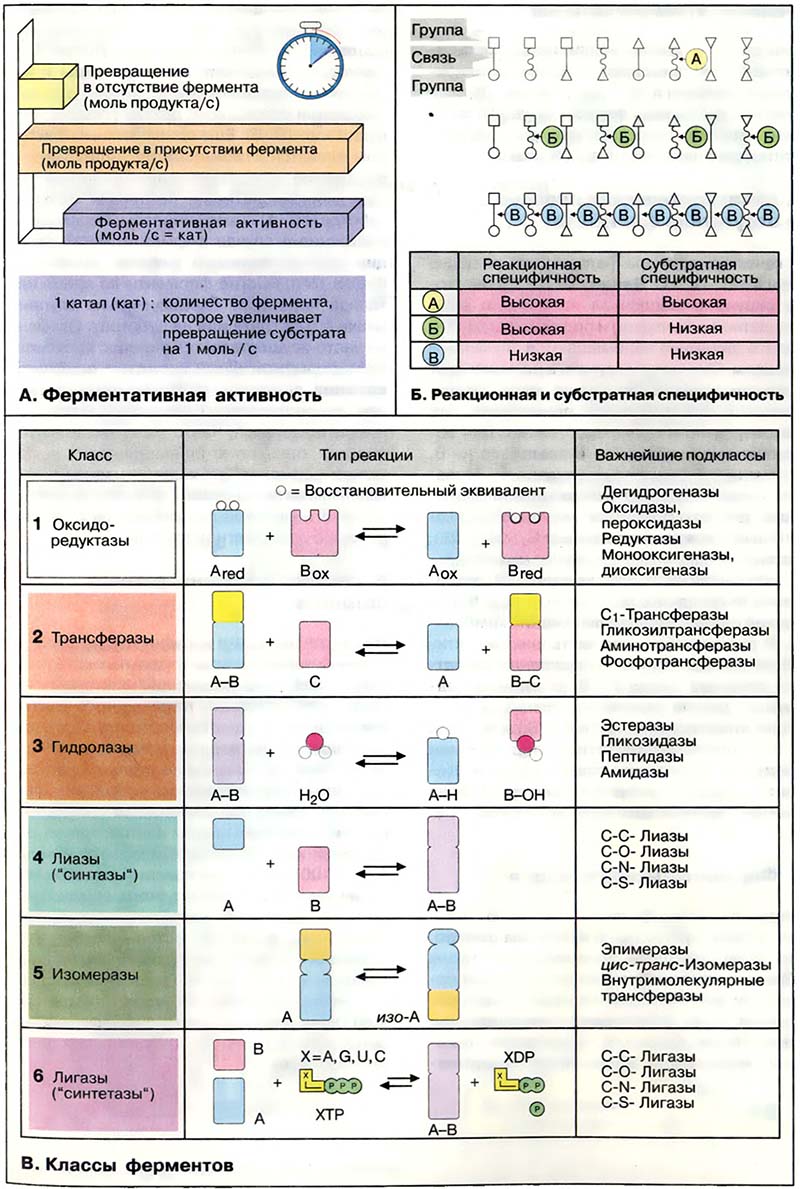
Каталитическое действие фермента, то есть его активность, определяют в стандартных условиях по увеличению скорости (фиолетовый цвет на схеме) каталитической реакции (оранжевый цвет) по сравнению с некаталитической (жёлтый цвет). Обычно скорость реакции указывают как изменение концентрации субстрата или продукта за единицу времени (моль/(л×с)) (см. Кинетика химических реакций). Так как каталитическая активность не зависит от объёма раствора, в котором протекает реакция, активность фермента выражают в каталах; 1 кат — это количество фермента, которое превращает 1 моль субстрата за 1 с. Другой единицей активности является международная единица (Е) — количество фермента, превращающего 1 мкмоль субстрата в 1 мин (1 Е = 16,7 нкат).
Статьи раздела «Ферменты: общие сведения»:
- Ферменты: общие сведения
- А. Ферментативная активность
- Б. Реакционная и субстратная специфичность
- В. Классы ферментов
Структура:
Списки:
Сложность материала:
Величины и единицы:
Книги Список книг
 Введение в молекулярную биологию
 В книге обобщаются современные достижения сравнительно новой отрасли знания, ...
 Молекулярная биология процессов развития
 Книга представляет собой полную сводку современных знаний о молекулярных ...
 Introductory Chemistry: Concepts and Critical Thinking (6th Edition)
 Introductory Chemistry: Concepts and Critical Thinking, Sixth Edition is a comprehensive learning system that offers print and media resources as well ...
 Биотермодинамика. Изучение равновесных биохимических процессов
 Учебное пособие, в котором авторы из США и Великобритании в доступной форме ...